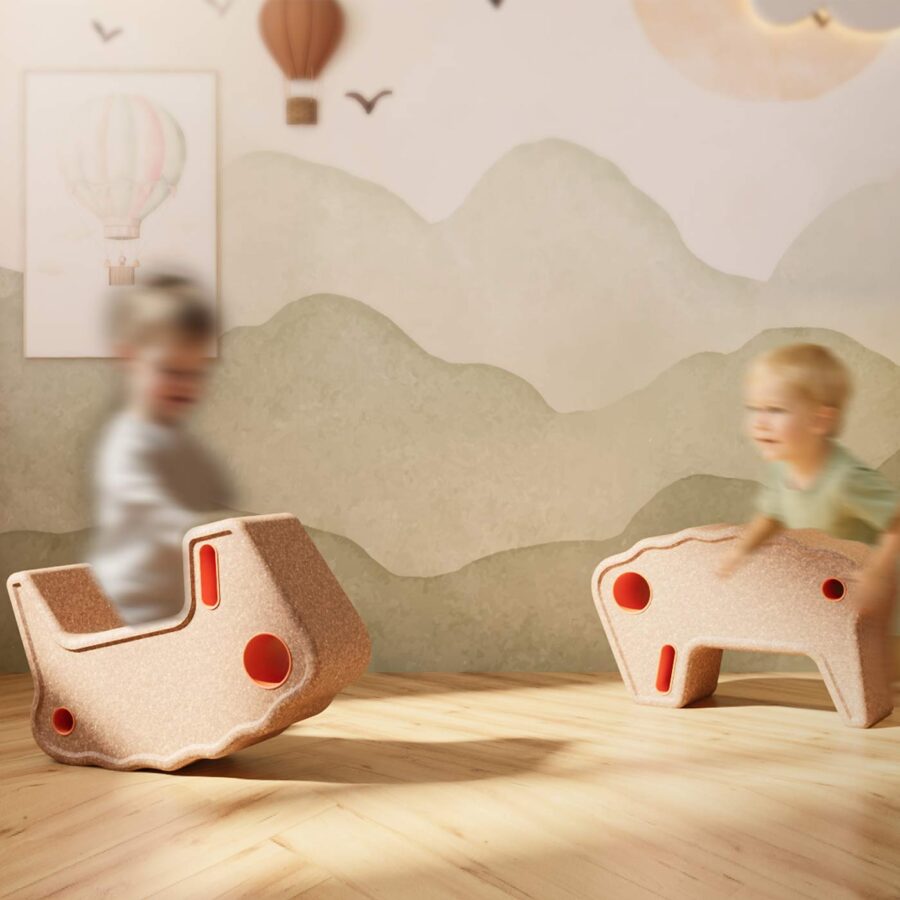
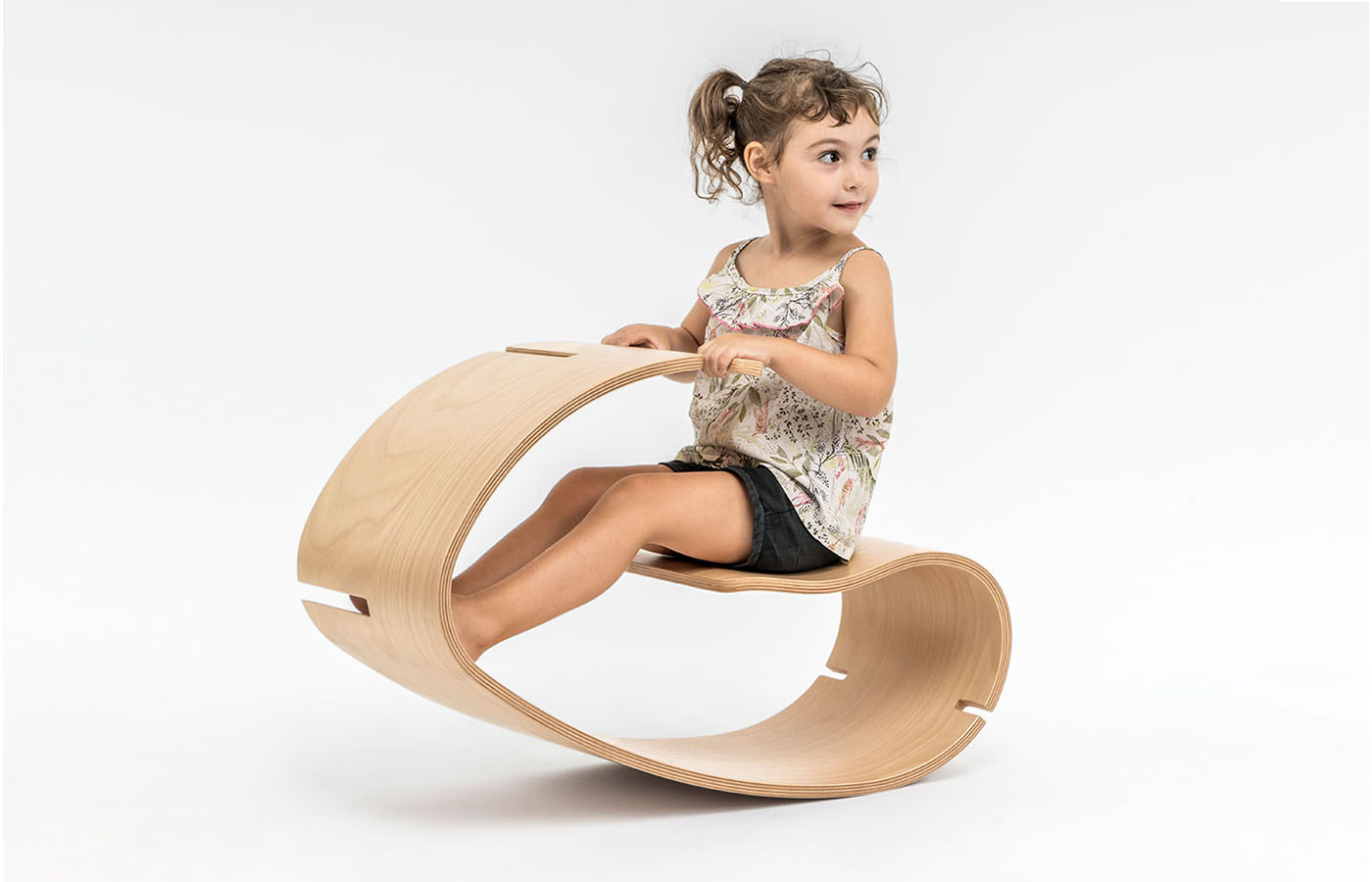
What if one piece of furniture invited children to sit, rock and invent new ways to play? DuoPlay by Ekim Güney Öztürk transforms through simple rotation from a rocking toy into a bench or an animal-like character. Made from cork and recycled PLA, the concept was shortlisted for the Green Product Award and combines open-ended play with longevity and responsible material choices. In our interview, Ekim talks about children’s imagination, sustainable design and why furniture should adapt to changing ways of play.
Ekim, DuoPlay is a multifunctional play furniture that encourages children to play freely. Tell us briefly how the idea came about.
The idea came from observing how children naturally reinterpret objects around them. A simple form can suddenly become a dinosaur, a bird, a vehicle, or a shelter through imagination alone. Most children’s furniture, however, is very fixed in its function and often becomes obsolete quickly.
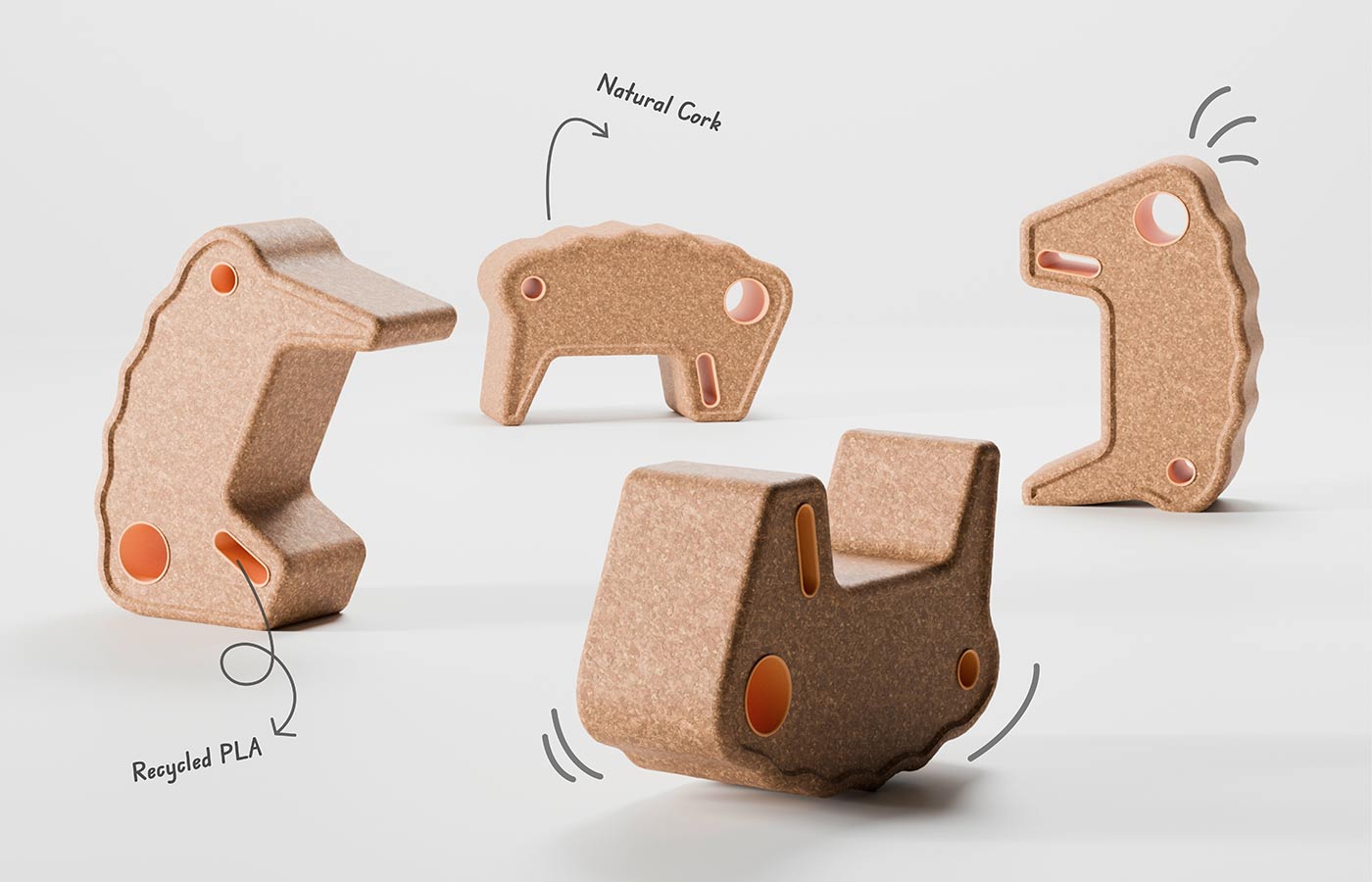
DuoPlay was designed as an open ended playful furniture that changes depending on how the child interacts with it. By simply rotating the form, it can become a rocking toy, a bench, or an animal like character. The goal was to create something that supports free play while also functioning as a long-lasting everyday furniture.
Your choice of materials was a key factor in DuoPlay being shortlisted for the Green Product Award. Why did you choose cork and biodegradable plastic for the connectors?
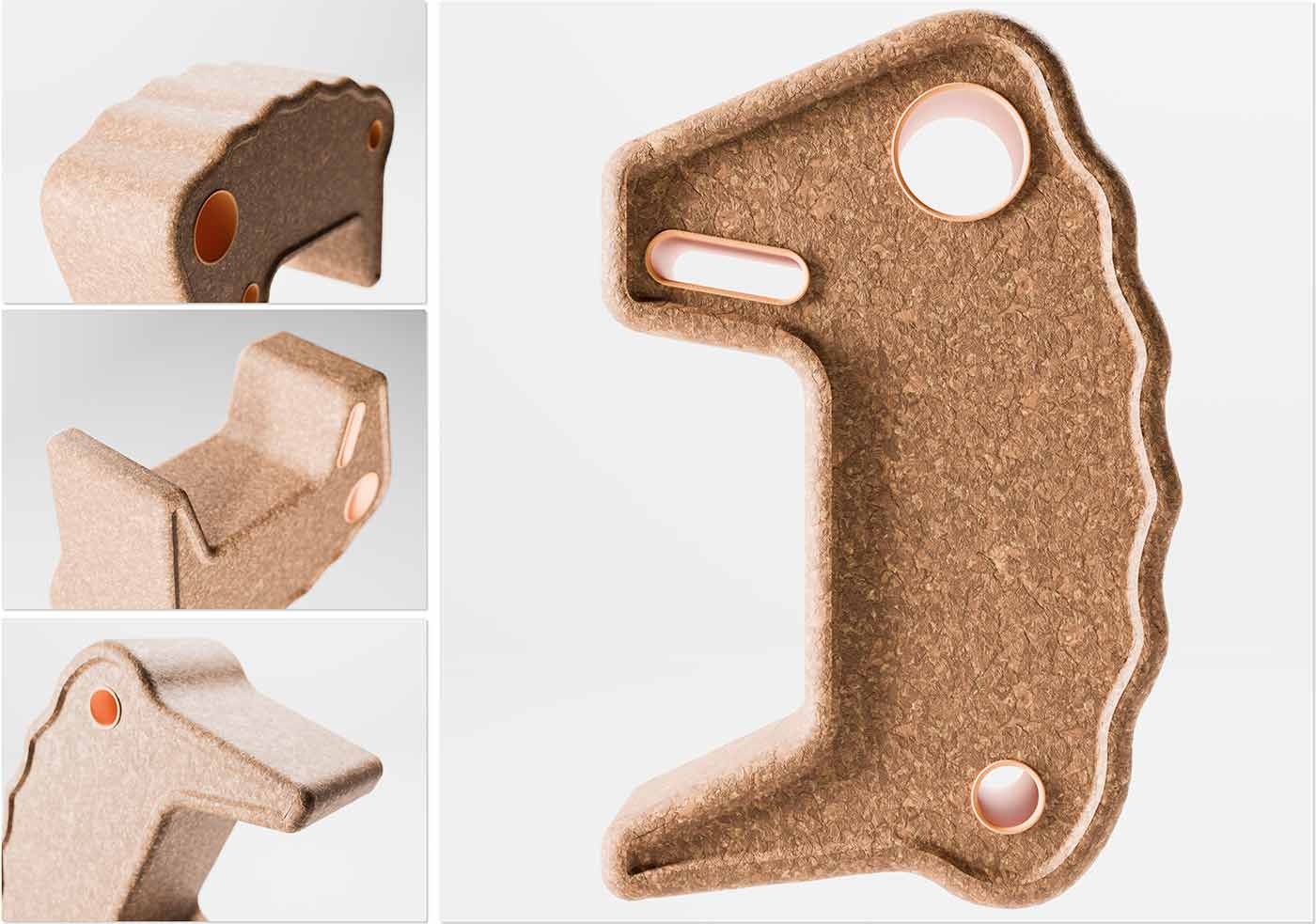
Often times toys are made from cheap plastics, and unfortunately children’s furniture is often not very different. If we want to envision a brighter and more sustainable future, we should start reflecting that vision to children as early as possible. Cork was a natural choice because it combines several qualities that are especially important for children’s products: it is lightweight, impact absorbing, warm to the touch, non toxic, and renewable. It also ages beautifully and has a soft tactile quality that encourages interaction.
For the connection elements, recycled PLA was chosen to strengthen the message conveyed through material choice, a hybrid system where each part serves a purpose structurally, environmentally, and emotionally. As well as form and function, materiality itself communicates sustainability in a visible and honest way.
Have children had already a chance to play with DuoPlay yet? What were their reactions?
My playful furniture DouPlay is still mostly in its conceptual phase. In the next stages, I plan to develop physical prototypes and test them directly with children to better observe interaction, movement, and play patterns. So far, the feedback has mainly come from adults, who generally responded with curiosity and excitement toward the product.
Designing for children often also means designing for the child that still exists inside every adult. Because of this, many people immediately relate to DuoPlay emotionally; some see it as playful furniture, while others interpret it almost like a character or object from their own childhood memories. I believe much of this reaction comes from the combination of natural materials, softness of form, and the flexibility of use scenarios, which allows the object to feel open ended rather than prescriptive.
Is there anything else you’d like to tell us about DuoPlay?
I would like to emphasize one of the most important aspects of the product: longevity. Children’s furniture is often designed for a very narrow age range and quickly turns into waste. DuoPlay tries to challenge this by combining multiple functions in a timeless form that can adapt to changing behaviors over time. I think longevity and sustainability should be at upmost importance while designing for children.
Tell us briefly about your background. Why do you design for children?
I have graduated in Industrial Design with BSc at Istanbul Technical University and finished a master’s degree in Integrated Product Design at Politecnico di Milano. At the moment I work freelance and soon I will start a specialized one year fully funded course on Designing for Children at IED Roma.
I don’t exclusively design for children and whenever i design a furniture or another piece aiming children, I feel like designing for myself too. In other words, I design things which I would like to play as well. Other than pure fun of designing for children, I also believe it is an area of design which is not explored well enough. There is so much to do there.

Ekim Güney Öztürk
Contact:
Ekim Güney Öztürk rxvztharl.bmghex@znvy.cbyvzv.vg
About the author
Katja Runge studied applied cultural studies, trained as a TV journalist and worked for many years as a communications consultant in the design and creative industries. In 2012, she founded afilii – platform and community for meaningful design for kids. With the Prototypes format, she enables young talents to present their ambitious designs to a wider audience. Katja conducts the interviews herself, edits the answers and puts the finishing touches to the text and images.