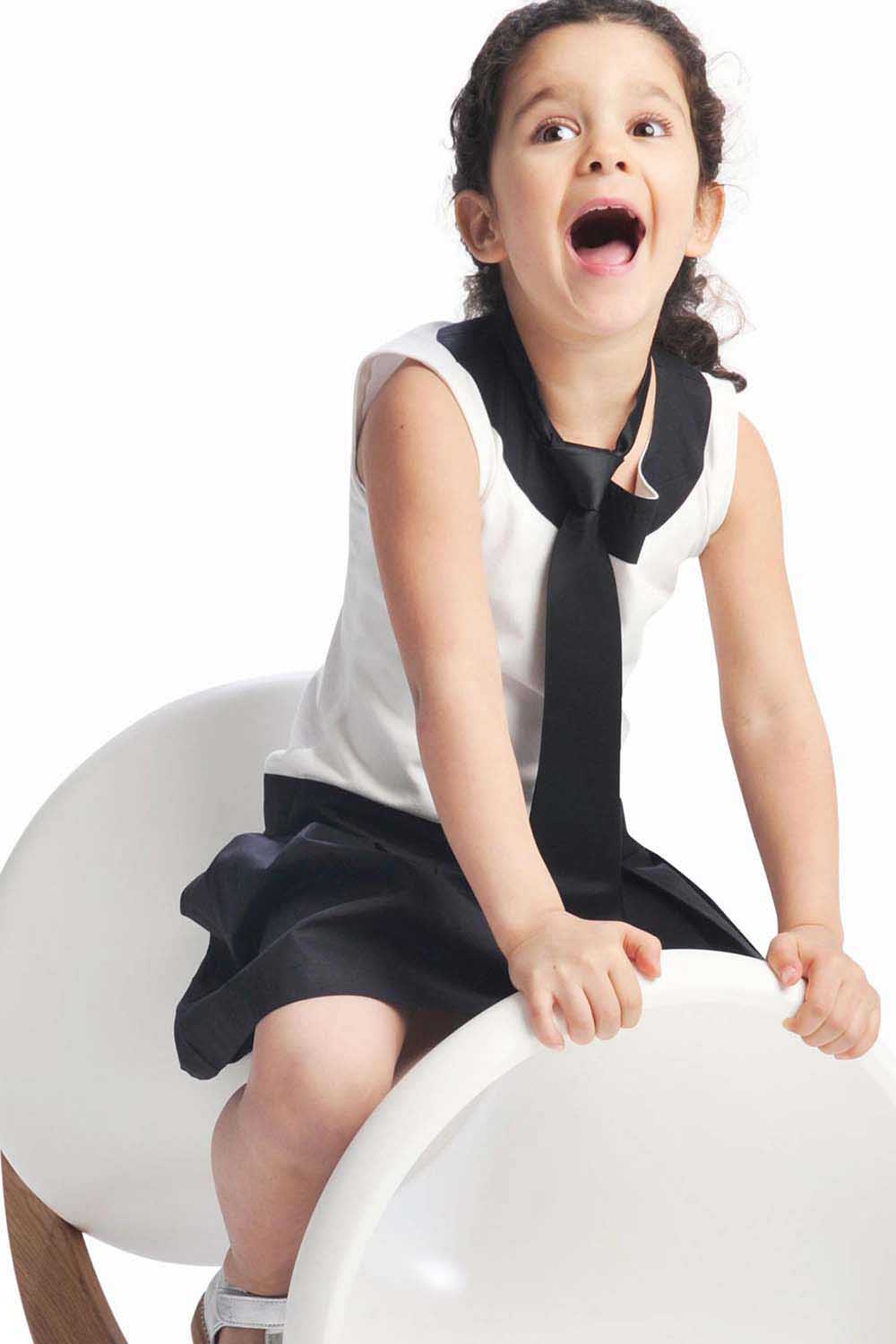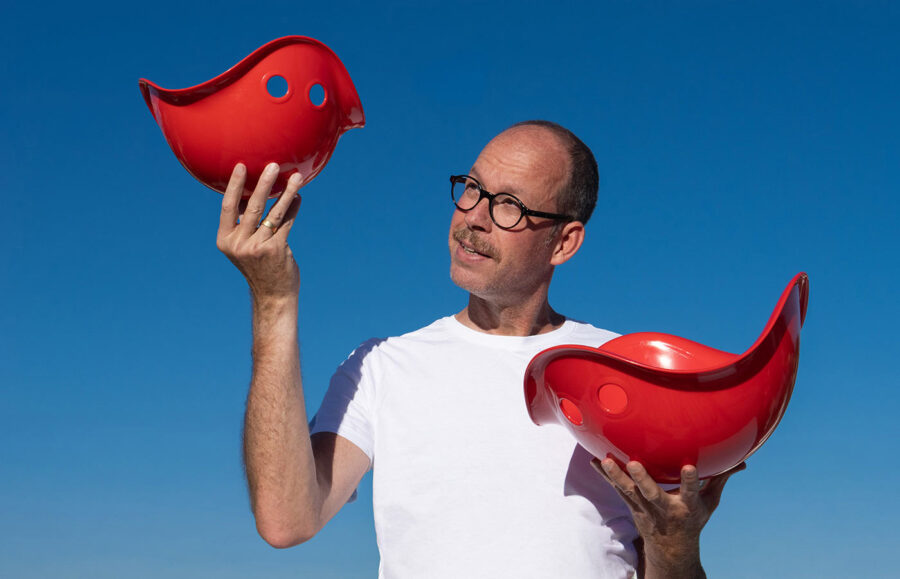
A colorful plastic shell, two eyes, endless possibilities for play: for 25 years, Bilibo has delighted children in more than 50 countries – no instructions needed. Swiss designer and MOLUK founder Alex Hochstrasser shares how his graduation project became an internationally acclaimed toy classic, why good toys leave room for children’s own ideas, and what responsible design really means.
Alex, Bilibo began as your final-year design project – developed through a participatory process and with the guidance of developmental researcher Remo Largo. What did you learn about children back then that directly shaped Bilibo?
In our conversations, Remo Largo encouraged me to trust children. Rather than starting with fixed ideas about what a toy should teach or encourage, it was more important to observe what children actually do. A proverb he liked to quote – “Grass doesn’t grow faster if you pull on it” – stayed with me throughout the project.
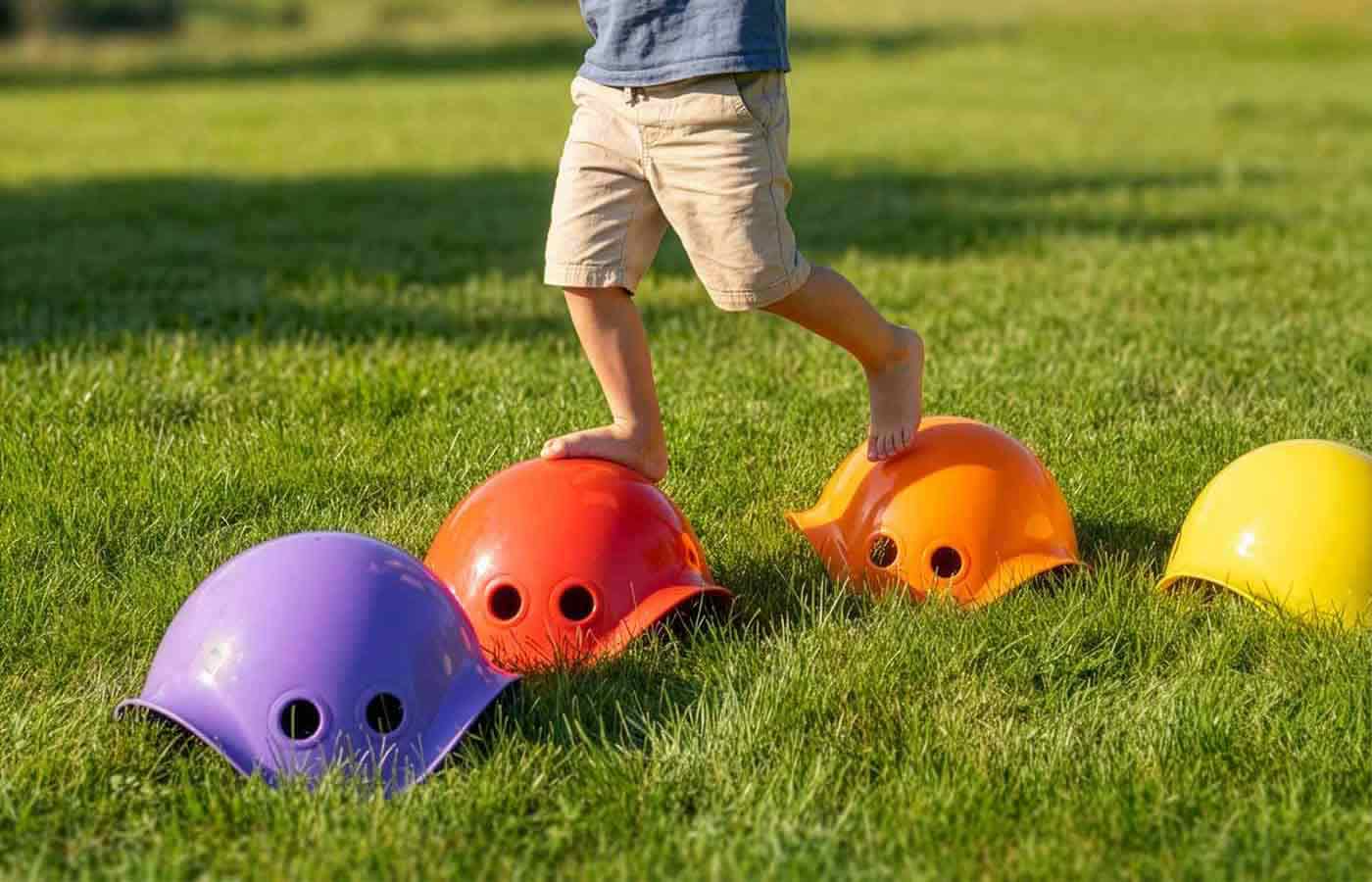
I spent a lot of time at the kindergarten in our village, watching how children interacted with things that weren’t toys at all: ropes, chairs, blankets, stones. Quite naturally, they turned them into the raw materials for their own play worlds. I also drew on memories of my own childhood: building huts in the woods or hopping across stones at the river.
The cardboard box that gets played with longer at Christmas than the gift inside became my secret benchmark. I wondered whether I could design something with the same openness that offered additional possibilities for play. With Bilibo, a child can climb onto the shell or hide beneath it. Then they turn it over, sit inside and set everything in motion. The same shape offers stability or challenges their balance.
When I brought the first prototypes back to the kindergarten, the children didn’t ask what they were supposed to do with them. They simply started playing. Largo was right.
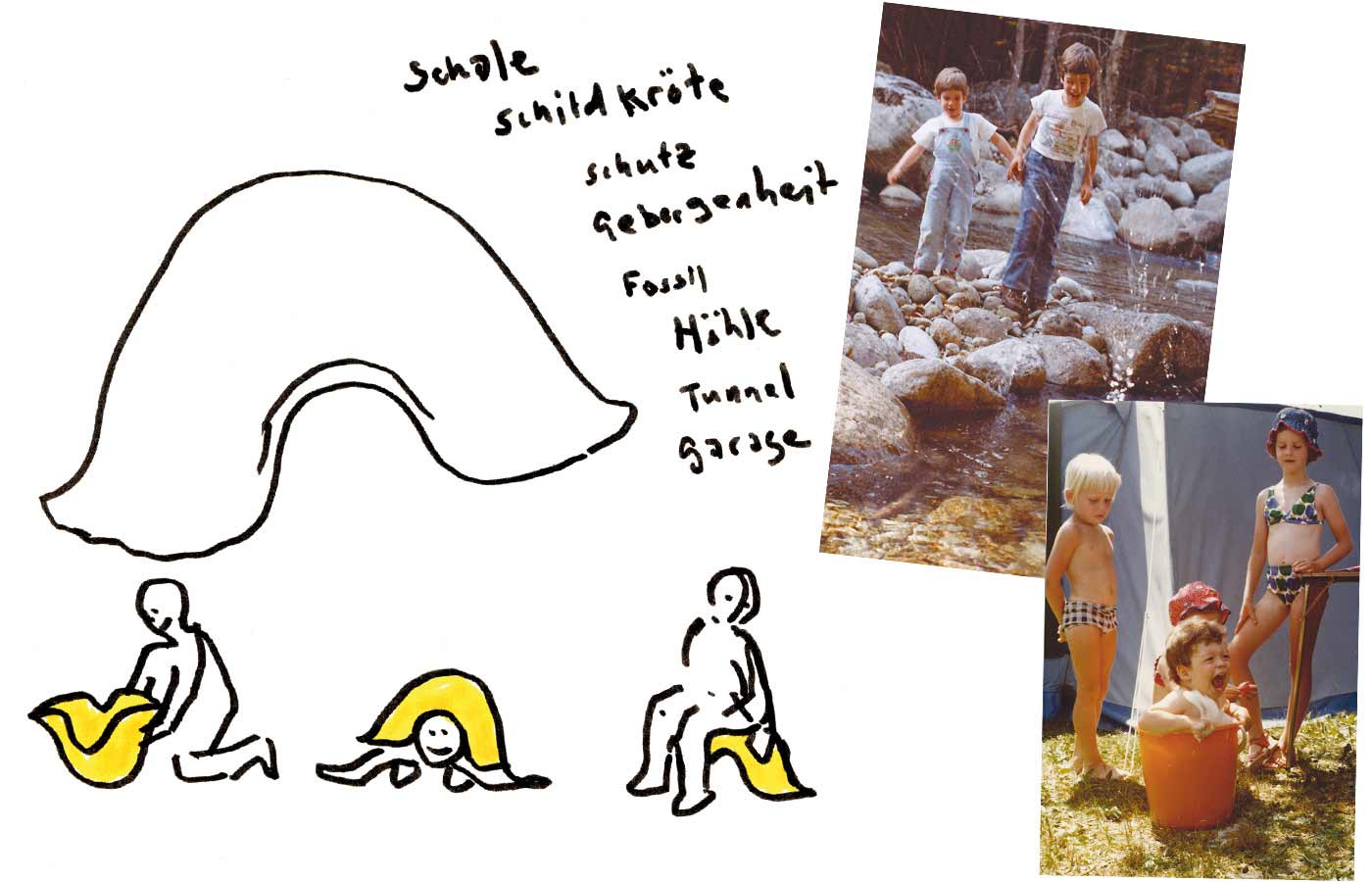
Early design sketches for Bilibo
Bilibo is distinctive in form, yet radically open-ended. How much design does a toy need if it is meant to prescribe as little as possible, and when does it become too much?
The simplicity is the result of a long design process. The aim is always to distil as many possibilities for play and interpretation as possible into an object that still feels natural and effortless. If you can see all the hard work in the finished product, you’re probably not quite done.
A form that is too abstract can easily feel cold and uninviting. That’s why it needs a few carefully considered details. The two holes are Bilibo’s eyes. They give the shell character and direction, but also serve as attachment points for a rope, openings to peek through or holes for pouring water. The wave-shaped rim creates entrances for little figures or tunnels for a wooden train when Bilibo becomes a hill in a playscape. The same curves give a seated child’s legs room to rest comfortably and allow two identical shells to fit snugly together into a smiling sphere.
The design goes too far when I start making decisions that belong to the child and spell out the story. I also avoid purely decorative elements. With Bilibo, the smile comes from the form itself – it isn’t simply painted on.
That balance is what interests me: enough personality to create an emotional bond, but nothing that gets in the way of children’s imagination and initiative. It’s a guiding principle behind all MOLUK toys, which can be combined in ever-changing ways to create new play worlds.
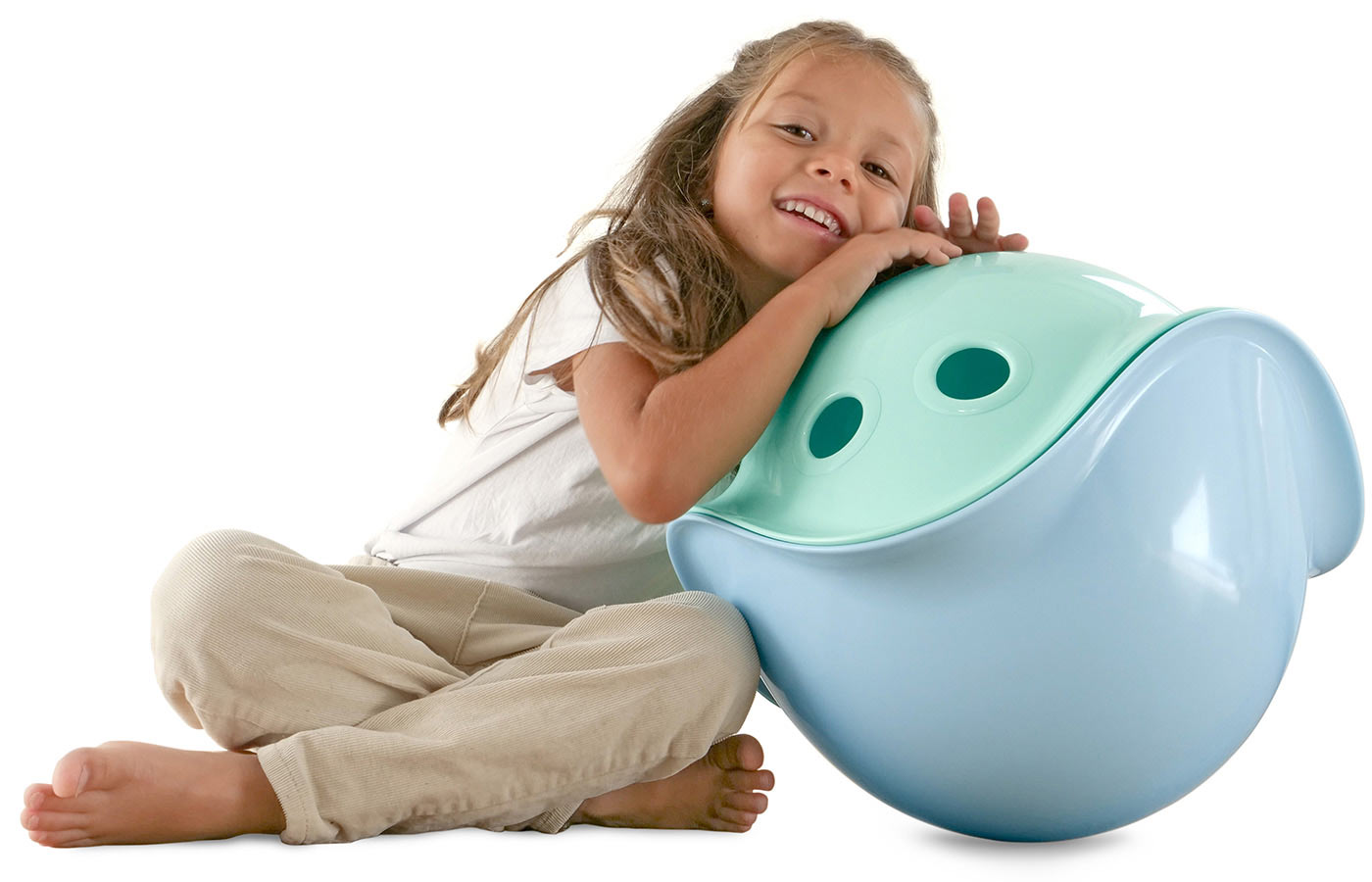
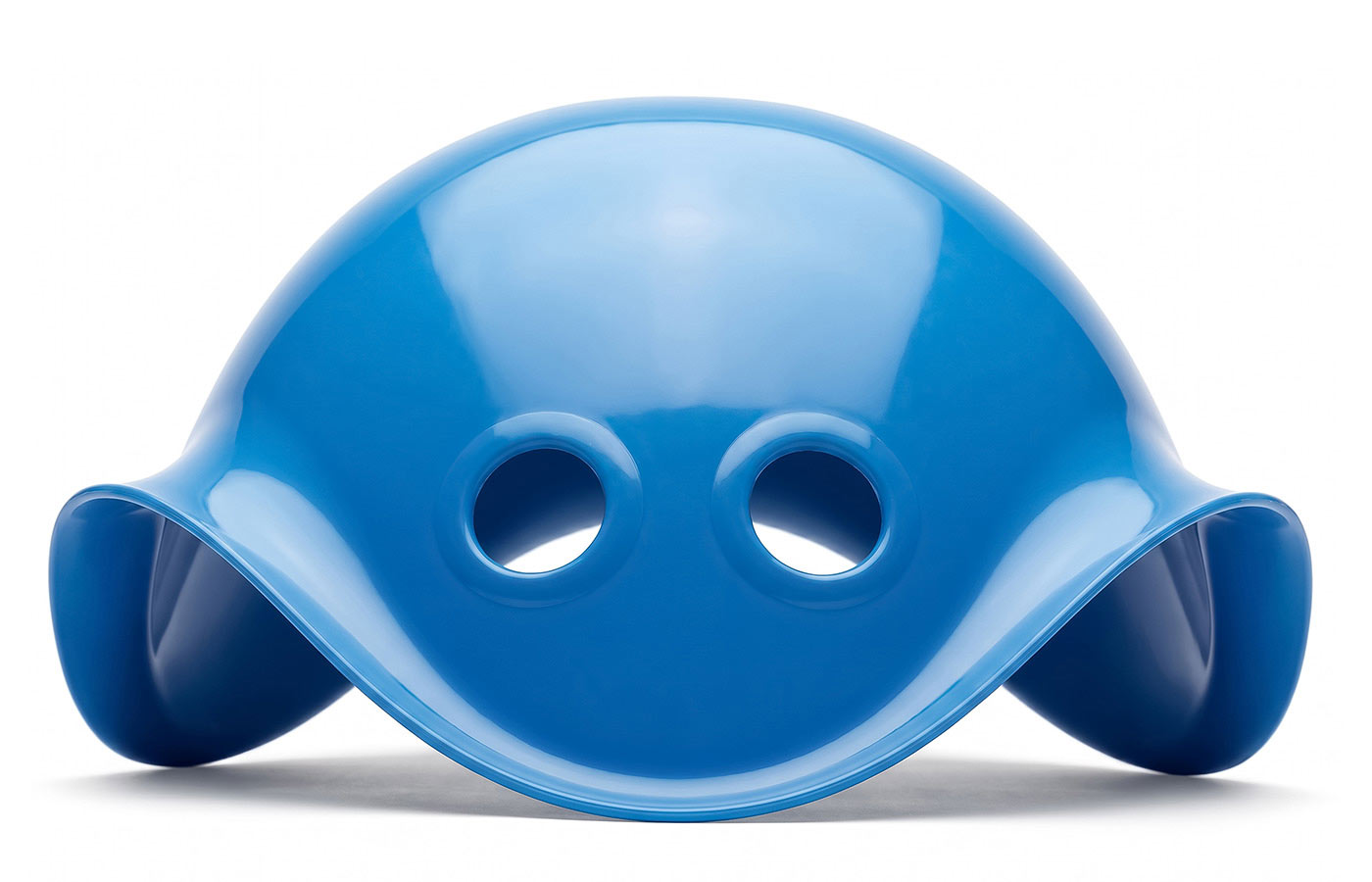
“Bilibo’s smile comes from the shape itself…”
For 25 years, children have been deciding for themselves what Bilibo can be. What have they turned it into that even you never expected?
The idea was always for Bilibo to take on many different roles. What surprised me most was how far its appeal extended beyond kindergarten age.
We’ve heard from teenagers who didn’t want to part with Bilibo even after they’d outgrown their other toys. It had simply found a new role – holding magazines and personal treasures.
Then some rather different playmates joined in. A zoologist in California saw children playing with Bilibo and wanted to try the shells with gibbons. The animals carried them around and climbed inside. My personal favorite, though, is a baby panda at Singapore Zoo, sitting in a blue Bilibo and happily wobbling away. The joy of rocking, hiding and exploring apparently connects us across species, too.
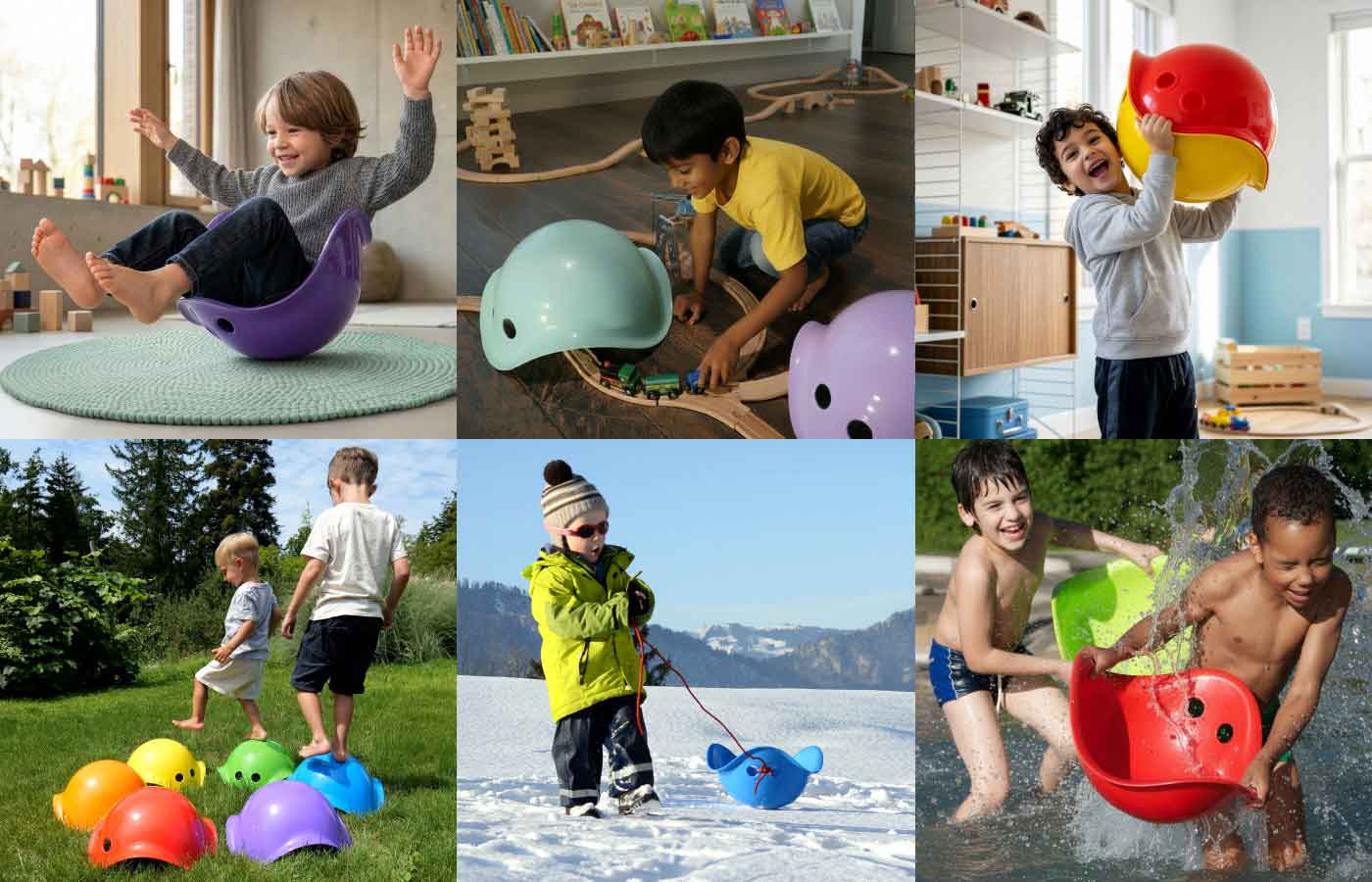
Endless possibilities for play: Bilibo by MOLUK
Bilibo still doesn’t immediately explain itself to adults. For retailers, that can be quite a challenge. How do you sell a toy that is actually better left unexplained?
Children understand Bilibo by simply playing with it. Adults often want to know first: “What does it do?” They’re used to every product having a specific purpose. An object that deliberately defies the usual categories doesn’t fit that expectation – and retailers aren’t quite sure which shelf to put it on either.
With adults, Bilibo works a little like a Rorschach test. Some people’s eyes light up as they immediately see the possibilities. Others shrug. At the American Toy of the Year Awards in 2010, I overheard a woman wondering aloud why there was a salad bowl among the nominees. Bilibo went on to win, thanks in part to the votes of many small, independent retailers.
These retailers remain our most important allies. We built MOLUK without outside investors. As a small company, we rely on word of mouth and committed partners who share our enthusiasm for meaningful toys.
There’s nothing wrong with explaining Bilibo. A short film or a few pictures can help adults find a way in. Better still, let children play with it in the store. Then Bilibo explains itself.
What matters is that examples are understood as suggestions. When children discover their own way to play, they feel like inventors. I wouldn’t want to rob them of that moment by giving them instructions.
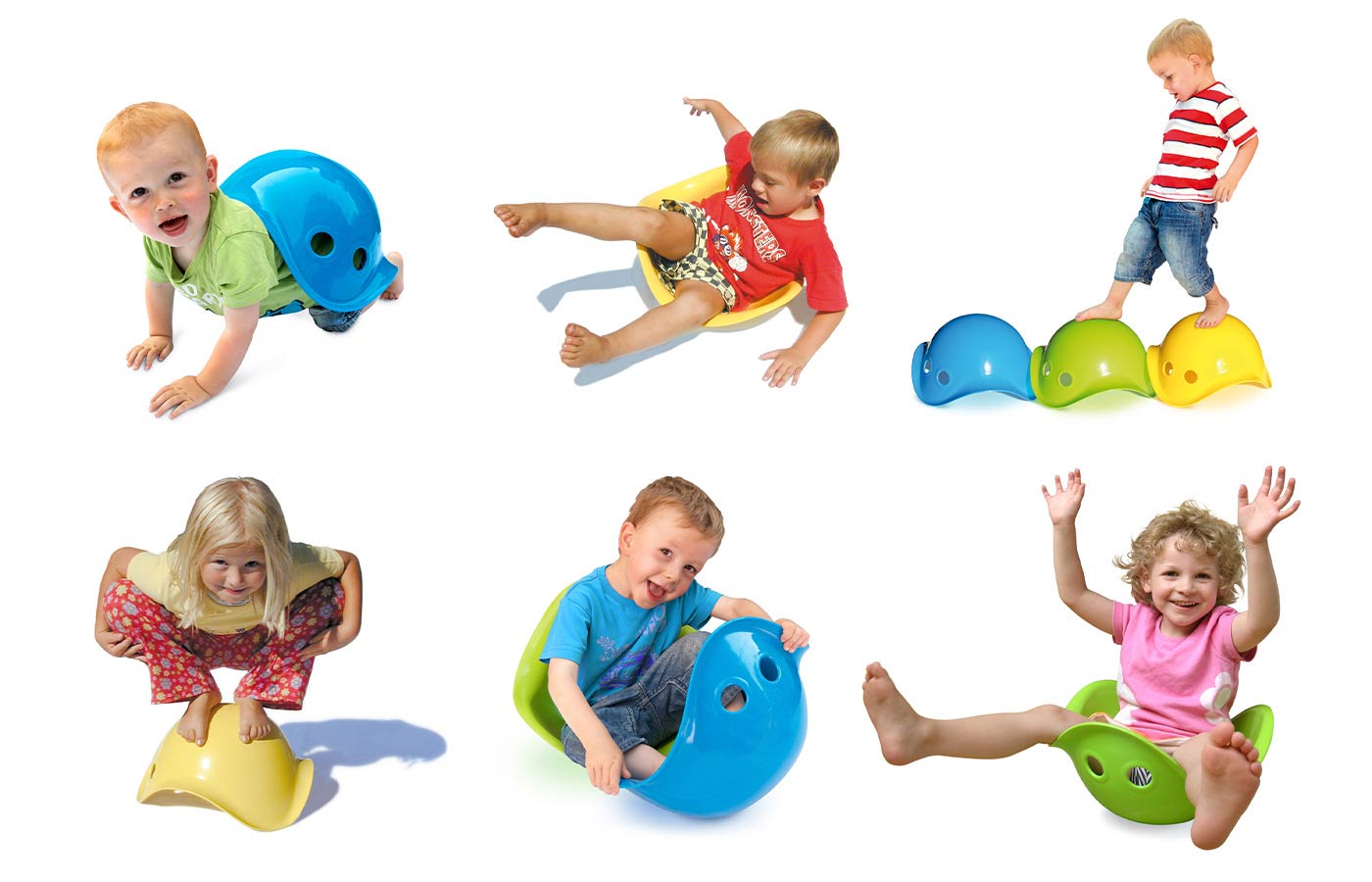
“Children discover Bilibo simply by playing with it…”
Bilibo is now part of international design collections. When does a toy become a design classic and does that label matter to you at all?
Of course, I’m flattered by the recognition. Seeing Bilibo in “Century of the Child” at MoMA in New York in 2012, and later in “100 Years of Swiss Design” at the Museum für Gestaltung Zürich, felt slightly surreal.
Whether a toy becomes a classic is something only time can tell. For me, a classic is something that continues to resonate, even as the world around it changes.
With Bilibo, I tried to leave out anything with an expiration date: trends, electronics, licensed characters. I wanted to follow children’s curiosity and instinct for play, and find an elemental form that left them as much room as possible. The world children grow up in has changed enormously since then. Their pleasure in moving, exploring and inventing has remained remarkably constant.
Today, the first children who grew up with Bilibo are watching their own children play with it. Whether they’re sitting in a design classic couldn’t matter less to the little ones.
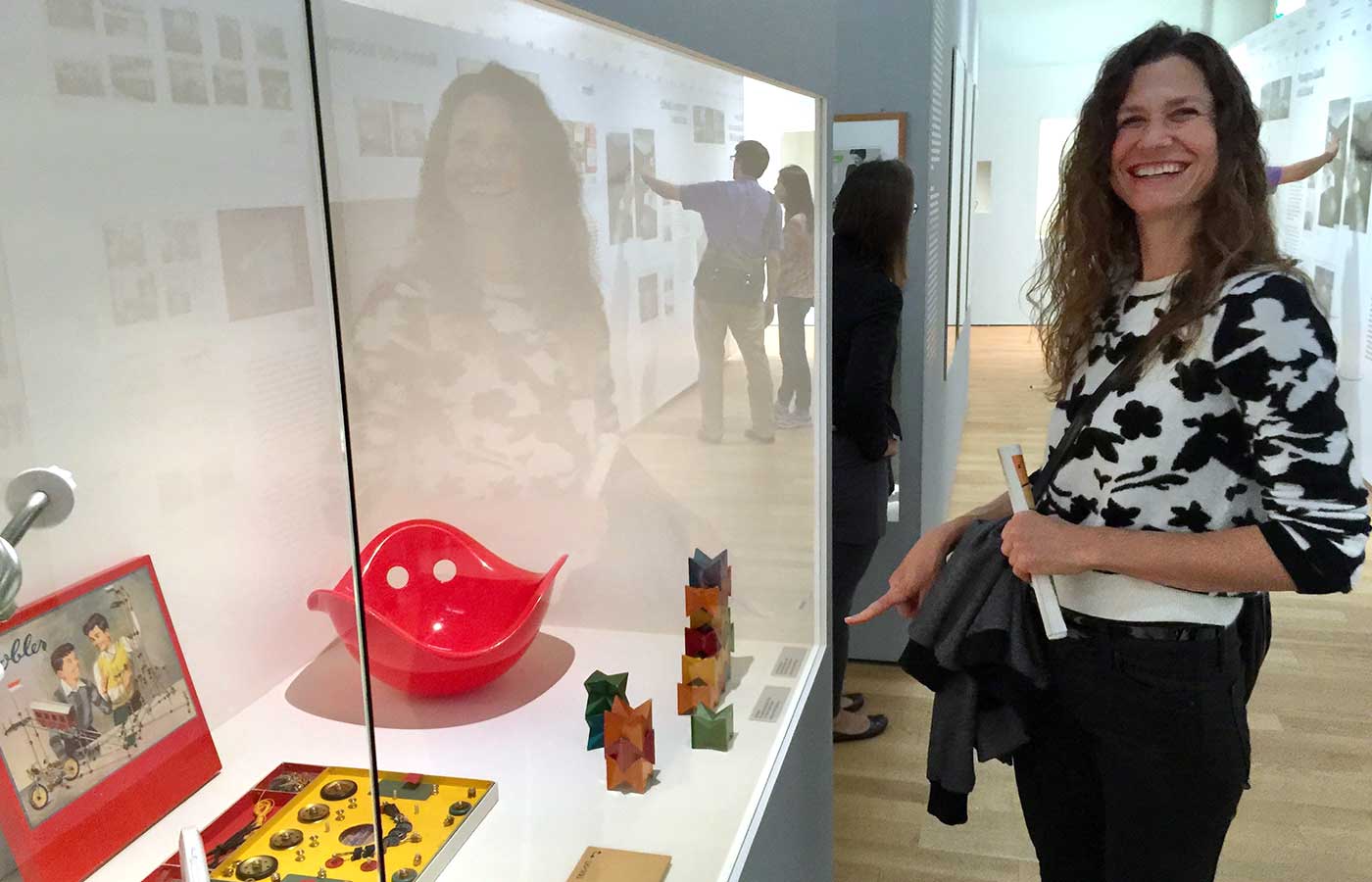
Bilibo with Doris Hochstrasser at the “100 Years of Swiss Design” exhibition
Bilibo owes its longevity in part to a plastic we view more critically today than we did 25 years ago. Does a design that has endured for decades eventually need to be rethought in terms of its material too?
It’s always worth revisiting the choice of material, even in a proven design. What matters to me is whether a change actually brings an improvement. At the same time, I want to push back when all plastics are lumped together.
Bilibo’s shell needs to be lightweight, robust and slightly flexible. It has to withstand rough play with water, sand and snow, and be easy to clean afterwards. So far, HDPE has proved the best fit for these requirements, holding up even in freezing winter temperatures. It’s the same plastic used to make milk bottles, for example, and has established recycling systems in many places. PVC, on the other hand, has no place in our products or packaging.
In 2021, we analysed Bilibo’s structure and built an entirely new production mould to use the material more efficiently. The result: Bilibo uses ten percent less plastic and is stronger at the same time. To me, that is also a way of rethinking how a design uses its material.
Even more important to me, though, is how long an object stays in use. It isn’t enough for an object to last – it also needs to grow with the child and keep offering new possibilities.
I’m always pleased when I find a Bilibo in a secondhand shop: someone played with it for years and then decided it was too good to throw away. Now another child gets to play with it.
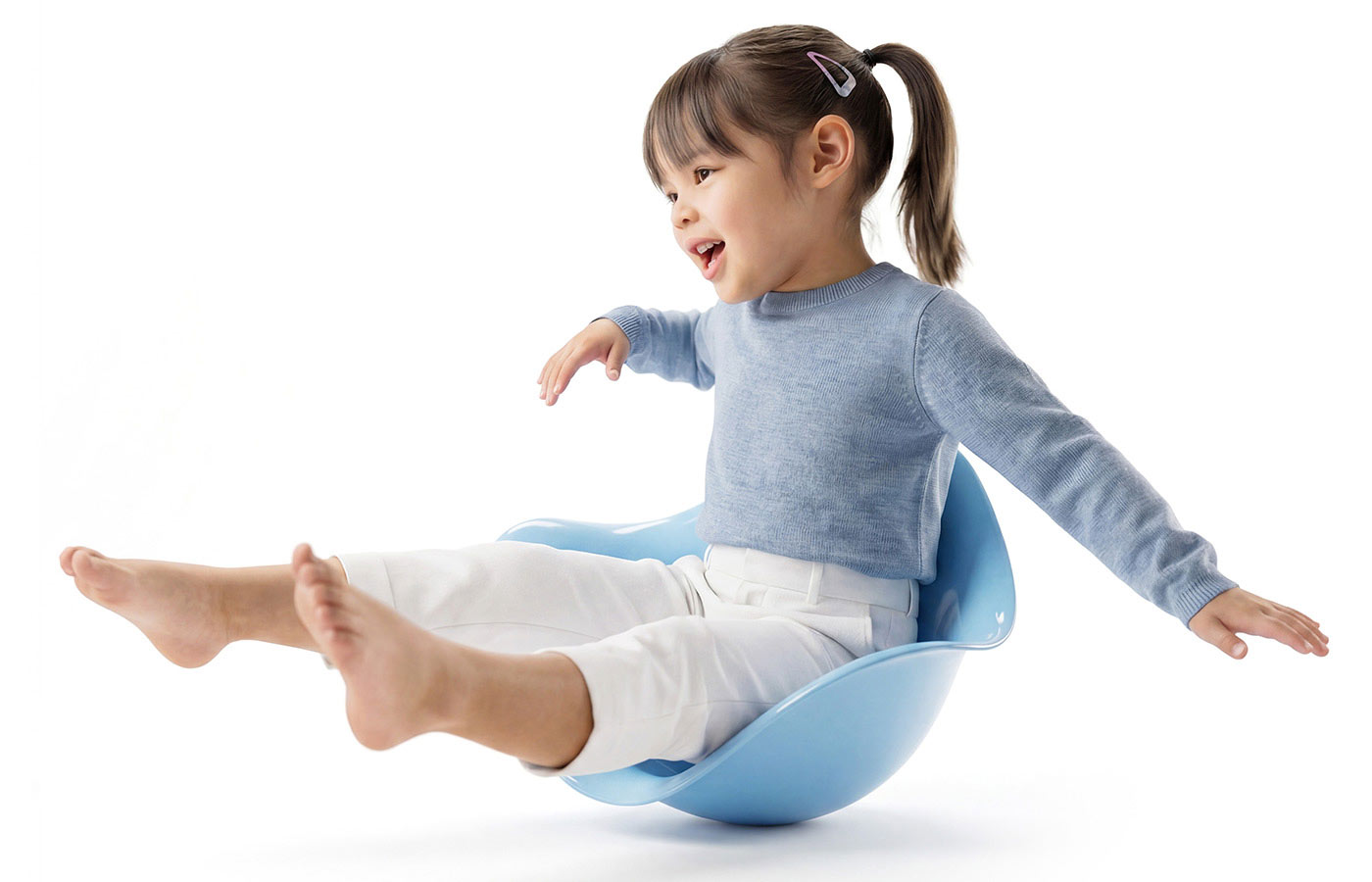
Made for rough-and-tumble play, even in freezing temperatures – and easy to clean
Alex, let’s jump 25 years ahead: Where do you see Bilibo in 2051?
Hopefully still at the heart of whatever game the children have dreamed up. Perhaps some kids will be playing with a Bilibo their grandparents used as children.
When I began designing it in 2000, I also wanted to lure children away from television. I could hardly have imagined how rapidly screens and digital entertainment would develop. Today, it feels more important than ever that children experience the world firsthand and with all their senses: touching things, putting them in their mouths, listening, feeling, exploring with their whole bodies. Technology cannot replace those experiences.
In an increasingly virtual world shaped by AI, I hope we’ll have people who think for themselves, follow their curiosity and trust their own abilities. That starts in early childhood: children need time to experiment, room to fail and freedom to do things adults don’t immediately see the point of. That’s what Largo taught me all those years ago. That same trust in children is at the heart of every MOLUK toy.
I don’t know what the world will look like in 2051. But Bilibo will still work exactly as it does today – with the child in the driver’s seat.
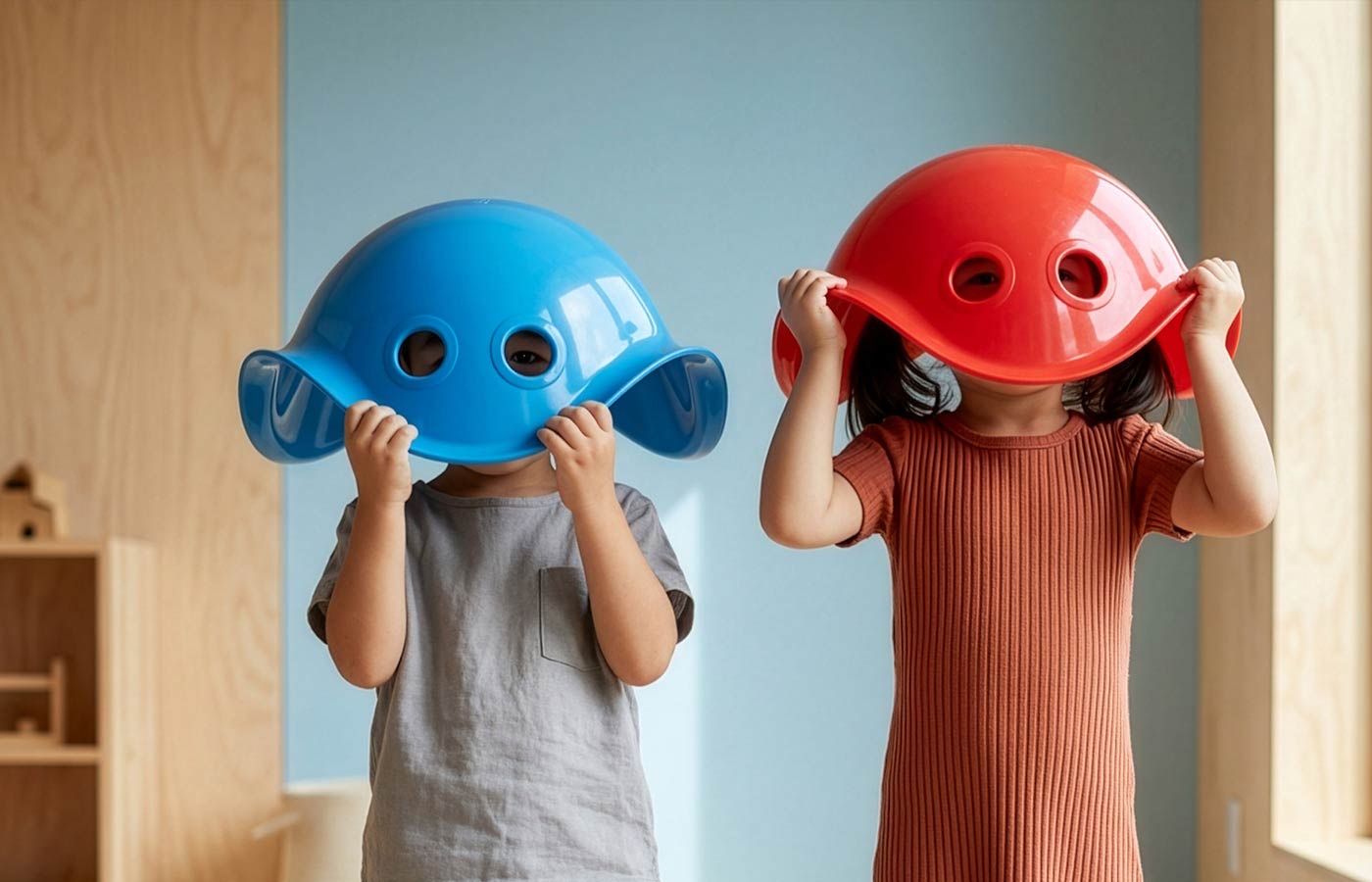
25 years of Bilibo – congratulations!
MOLUK online:
Discover more on afilii.com:
About the author
Katja Runge is the founder of afilii. With her many years of experience as a journalist, communications consultant and project manager in the design and creative industries, she brings a keen sense of language and topics to the table. At afilii magazine, she is involved in finding topics, writing articles and editing – working closely with the authors – always on the lookout for relevant, well-written content that offers real added value for our readers.