A height-adjustable children’s desk often marks the start of a new phase of everyday life. A child suddenly has their very own place to paint, craft, write and concentrate – and a new piece of furniture that will ideally accompany them for many years to come. To ensure that your new children’s desk is ergonomic, durable and sustainable, it’s worth taking a closer look at its material, adjustability and design. This article reveals the key things to bear in mind when purchasing an adjustable children’s desk and which solutions really make sense.
A child’s first day of school is often accompanied by another premiere: their first proper desk moving into their bedroom. Although many children prefer to do their homework close to their parents at first, it won’t be long until they are sitting at their own desk in their own room, as proud as can be. For children, a desk is a concrete symbol of being a fully grown schoolchild.
When it comes to choosing a desk for their kids, a height-adjustable children’s desk is the ideal choice for parents who think ahead. After all, it is essential to ensure that children always maintain correct posture when sitting at their desk. Once at school, children spend several hours a day at their desk, and while they work on learning maths, English and other subjects, their bodies are also hard at work growing. In fact, a healthy child grows up to seven centimetres a year, and before you know it, they’ve gone and outgrown their desk and chair.
With this in mind, a height-adjustable children’s desk offers a clear advantage: It grows with your child from year to year throughout their life – and can often then be passed on to their siblings, too.
What should parents bear in mind when buying a height-adjustable desk?
A children’s desk should ideally be infinitely adjustable, preferably with a crank handle that children can use to set it to the right height without needing any help. There should also be plenty of space under the desk – around 65 to 70 centimetres or even more if possible. If you plan to place a computer on the worktop, you also need to ensure the chair is at a safe distance from the screen.
It’s a good idea to opt for a tilting worktop that can be adjusted for specific activities. This way, you can already start to prevent tension and future back problems at a young age. Various studies have revealed that a worktop tilted at an angle of 10 degrees is ideal for writing, while 0–5 degrees are suitable for painting, and a 20-degree angle is perfect for reading. Alternatively, you can buy a tilted stand to place on the desk.
How large should the height-adjustable children’s desk be?
Height-adjustable children’s desks can usually be adjusted from a height of approximately 51 cm to 78 cm. In comparison, desks for adults have a standard height of 74 cm. An adjustable children’s desk therefore offers plenty of scope to cater to all needs and children of all sizes. It can grow with your child instead of frequently having to be replaced for the next size up.
Sustainable material for a height-adjustable children’s desk
When purchasing a children’s desk, it is particularly important to note the pollutant content of the materials used. In Germany, products display a quality seal and undergo testing to provide such information. In addition to the CE marking and the ISO standard, parents should also ensure that their chosen desk displays the “GS” safety mark, the German seal of approval for “tested safety”.
Seemingly cheap children’s furniture from the Far East often contains toxic paints, glues or other harmful substances that may trigger allergies. A wooden children’s desk, on the other hand, is a safer option made from a sustainable material.
If you also pay attention to the country of origin, you should choose a children’s desk from Europe that uses FSC-certified materials sourced from sustainable forestry.
Advantages: A height-adjustable children’s desk made of wood is stable, repairable and, in the best case, the more environmentally friendly choice because this raw material regrows and is often transported over shorter distances. Above all, wooden desks remain in circulation for a long time: After many years of use, they can simply be passed down to the next generation or easily sold on rather than ending up at the tip.
A timeless design for your children’s desk
There’s no denying it: Every year of a child’s life brings new preferences and tastes. While a four-year-old may delight in a world full of glitter or green dinosaurs, the chances are that they will have a completely different style a few years down the line.
It is therefore a good idea to opt for a children’s desk with a low-key, timeless design that will fit into your child’s bedroom perfectly both now and in their teenage years.
Spoilt for choice: a brief guide to your purchase
Over the years, an abundance of attractive height-adjustable children’s desks have established themselves on the market. Our list of examples provides an overview of selected models from owner-managed brands in Germany and across Europe. With these products, you can not only make the most of good quality and durability but also support owner-managed brands with a responsible, socially conscious approach.
“growing table” by pure position from Bavaria/Germany
When creating his “growing table”, a children’s desk that grows with the child and comes with a bench and other accessories, the product designer Olaf Schroeder was inspired by old Bavarian farmhouse tables. With its simple design combining natural wood with a white shade, the “growing table” is the perfect fit for virtually every room and is made of robust plywood with a wipe-off surface. Since its launch in 2009, the “growing table” has established itself as a classic children’s desk that grows with children. The desk is manufactured in a workshop for people with disabilities.
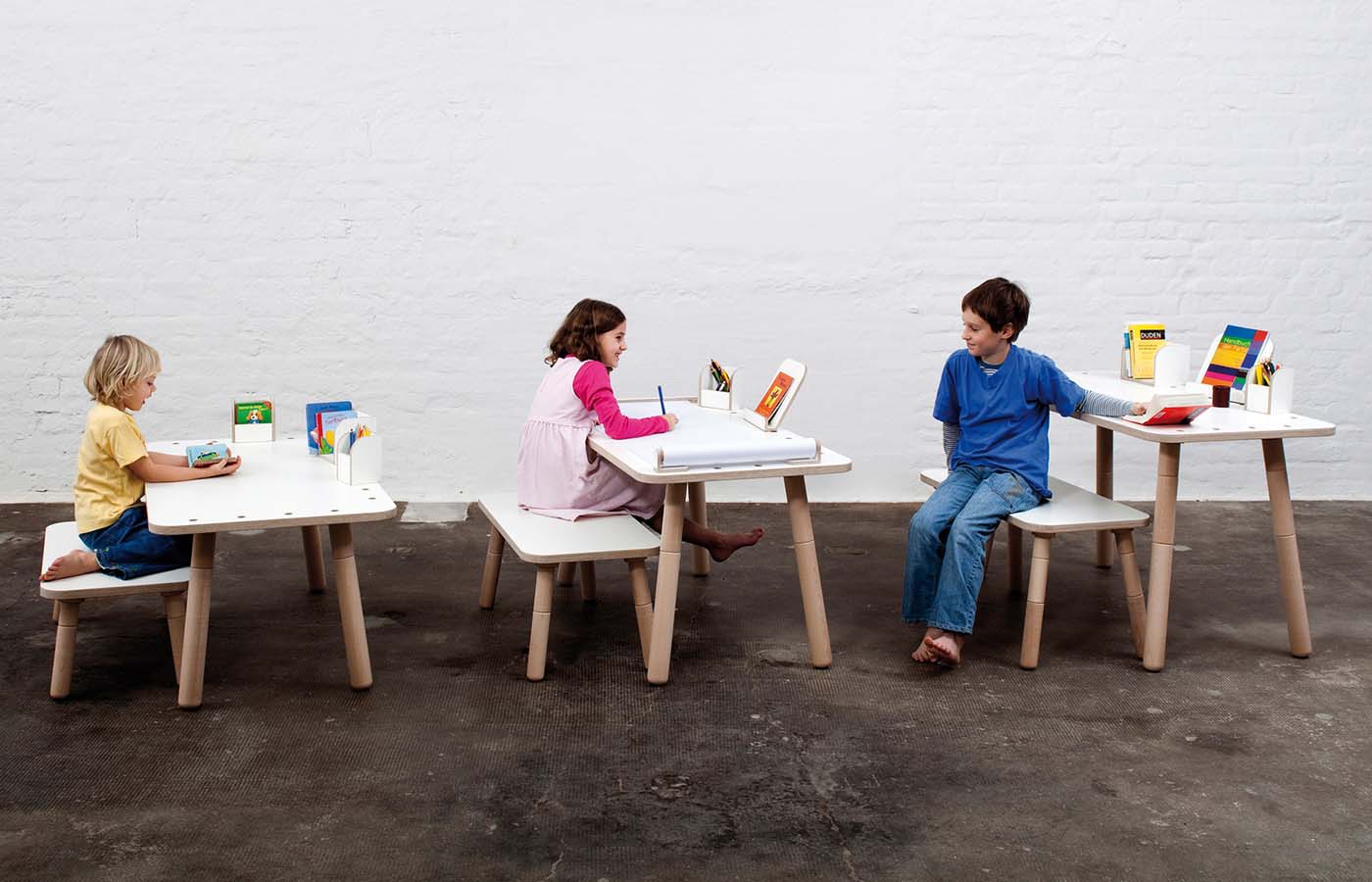
growing table by pure position
growing table by pure position
• suitable for children from ages 3 to approx. 14
• grows with the child in four steps from 42 cm to 72 cm
• made of certified beechwood from Germany and birch plywood from Eastern Europe
• manufactured in a workshop for people with disabilities in Bavaria
• certified by the German technical inspection association (TÜV)
• available from € 599
Looking to buy growing table by pure position? You’ll find it ready to shop here →
“stocubo” from Berlin/Germany
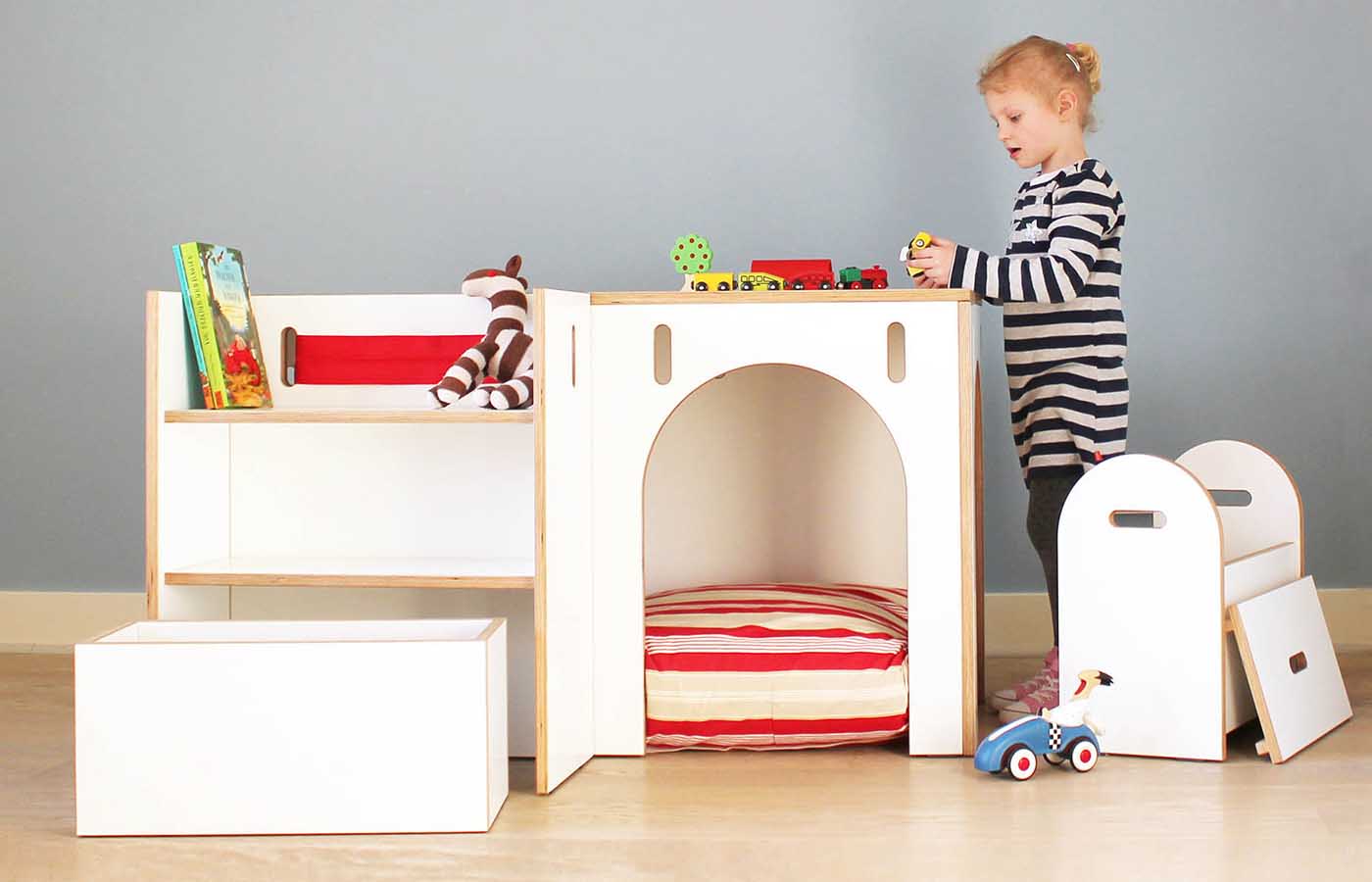
In this case, the label “Made in Berlin” genuinely means that the desk was manufactured in the German capital, at the company’s very own workshop in the heart of the Moabit district, to be precise. The »stocubo« height-adjustable children’s desk with storage can be expanded by adding a wide variety of boxes and drawers and can therefore be easily adjusted to meet the growing needs of children, young people and adults.
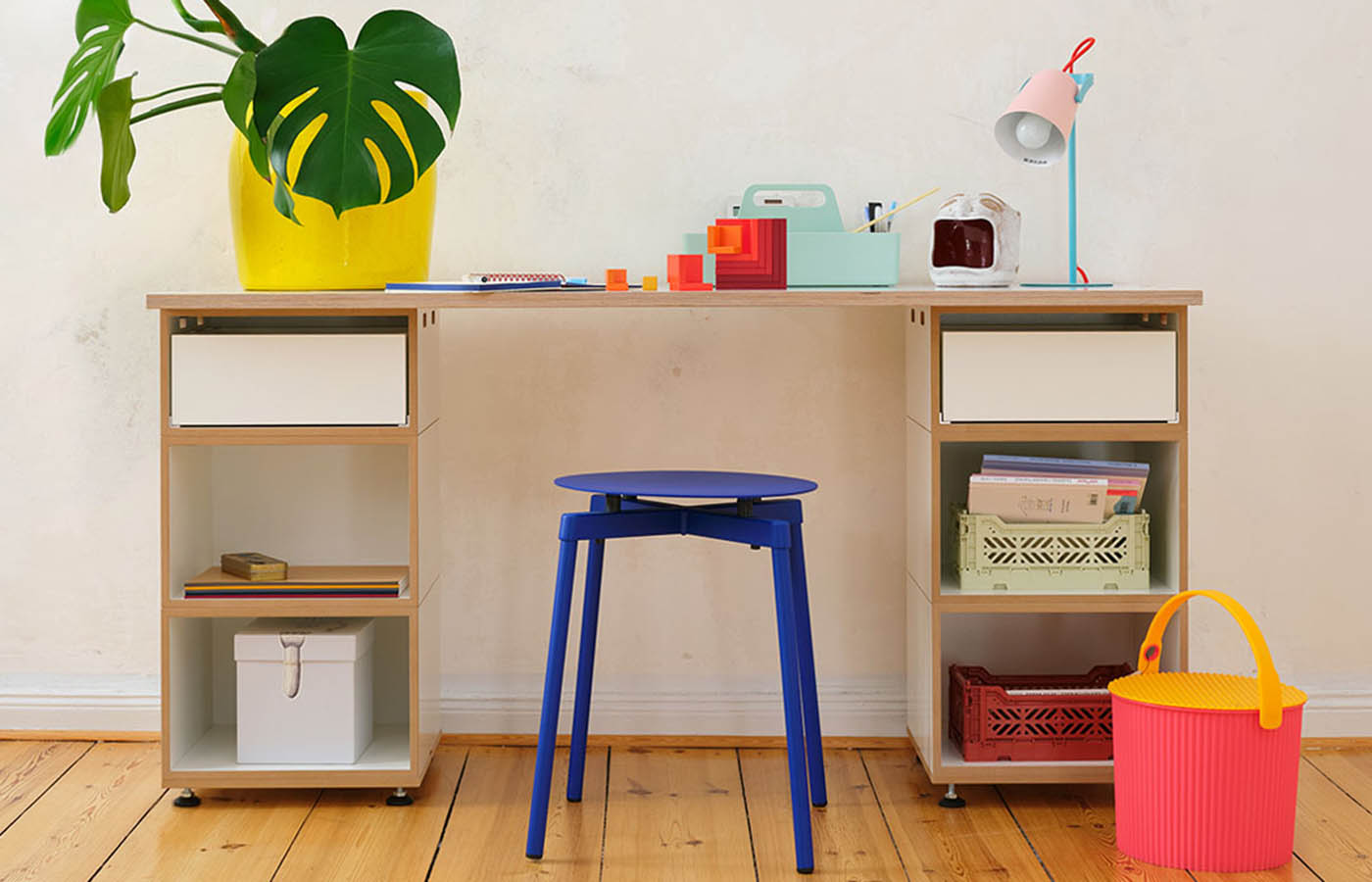
stocubo desk
The stocubo desk
• suitable for children aged 2 and up and for adults
• height-adjustable from 47 cm to 71 cm
• made of certified birch plywood from Finland and MDF from Germany
• manufactured by a female-run company in Berlin
• extremely easy to assemble without any tools
• available from € 665
Looking to buy the stocubo desk? You’ll find it ready to shop here
“blueroom” from Switzerland
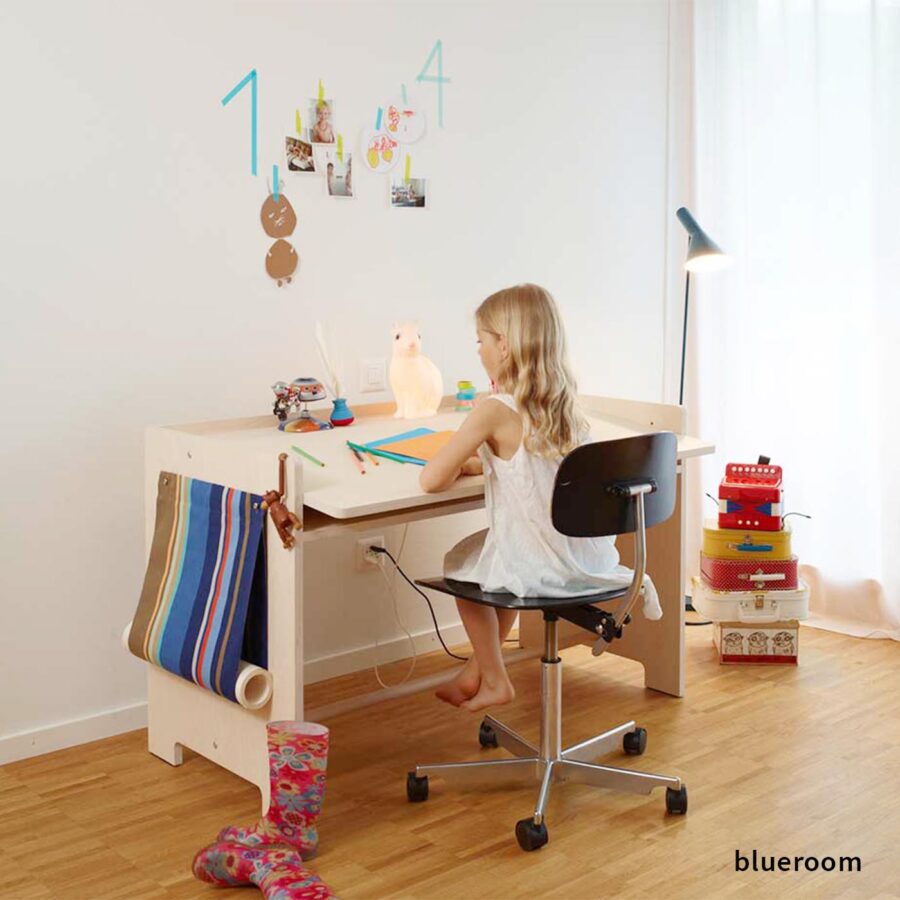
The “blueroom” adjustable study desk with a tiltable worktop is reminiscent of a vintage school desk but also offers the added bonus of being able to be converted into a modern workspace for teenagers and adults. The upper worktop of the desk can be rotated and removed, allowing the study desk to grow with children and be adjusted to suit their age and needs. Designed by the Swiss architect Isabelle Winterhalder-Anderhalden, the “blueroom” desk is a lifelong companion for all kinds of tasks, from a child’s first homework to an adult’s first tax return.
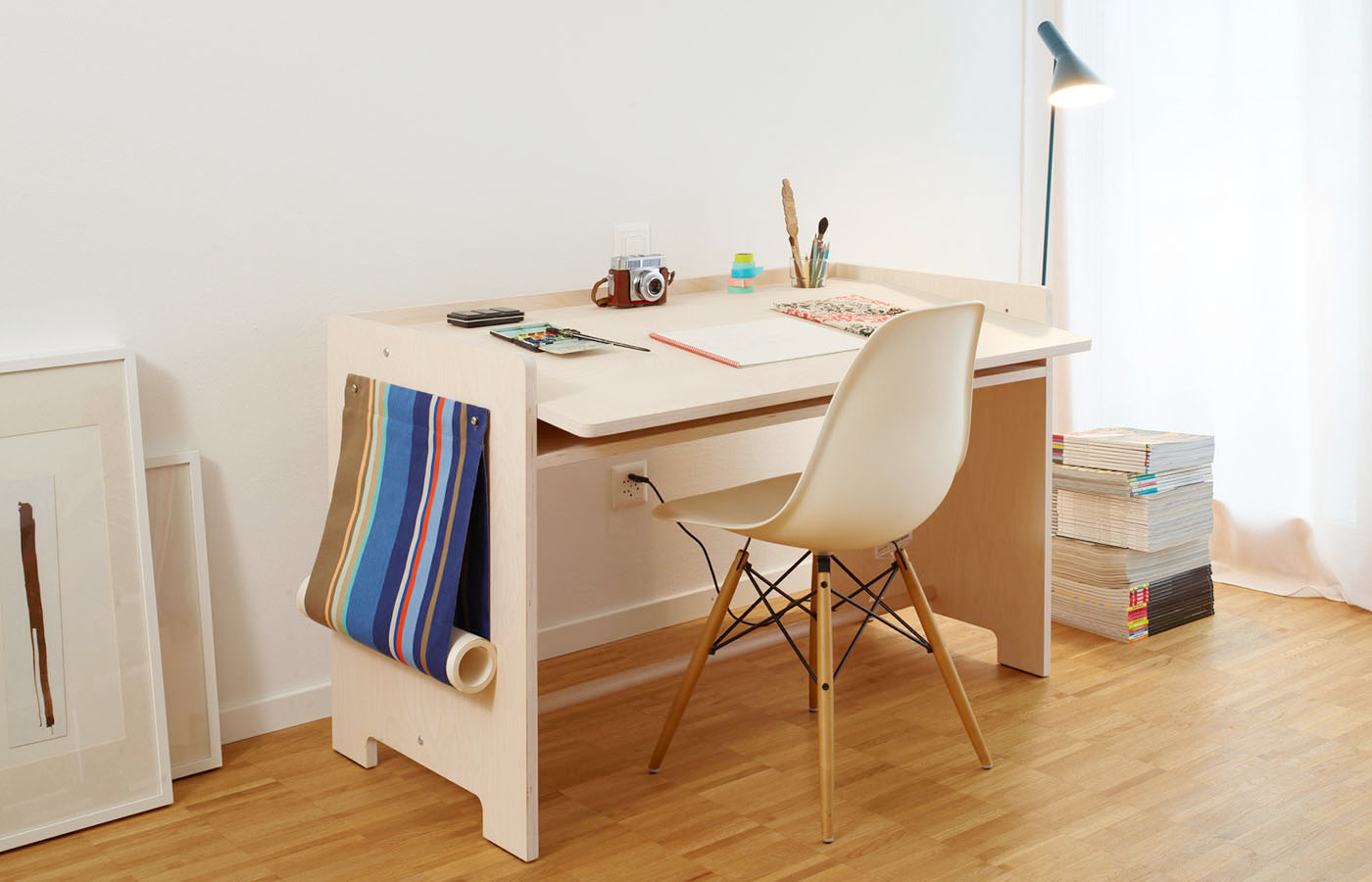
blueroom desk
The blueroom desk
• suitable for children aged 5 and up and for adults
• made of certified birch plywood
• manufactured in a workshop in Switzerland
• available from CHF 1,350
Looking to buy the blueroom desk? Check out the contact details here →
“Zwerkbank” from Hamburg/Germany
The latest model to be launched on the market of ‘desks that grow with your child’ is the “Zwerkbank” children’s work desk and chair. It was invented by the fathers and product & software designers Martin Poggenclaas and Sven Lüdicke from Hamburg in 2024, when Sven was looking for a children’s work desk and chair for his daughter as she embarked on primary school life. After failing to find a solution suitable for both homework and crafting fun, they came up with the idea of the “Zwerkbank”, a height-adjustable children’s work desk and chair with a timeless design featuring a stable steel support frame that impresses both children and parents interested in design and architecture.
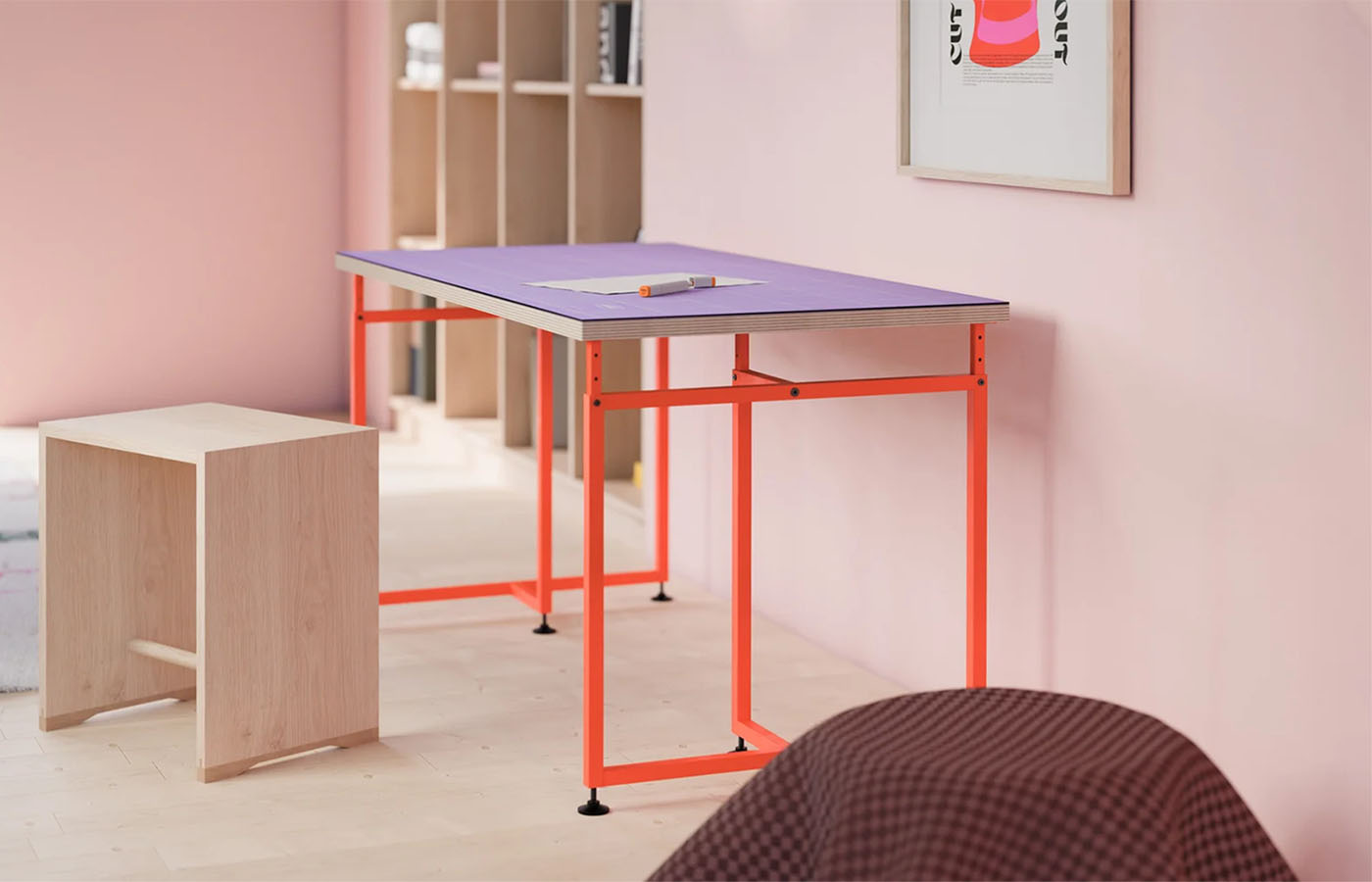
Zwerkbank desk
The Zwerkbank desk
• suitable for children from ages 4 to approx. 16
• height-adjustable from 58 cm to 70 cm
• comprises two parts: a powder-coated steel support frame available in orange or white and a tabletop made of 24 mm thick birch plywood
• tabletop manufactured in Germany, steel support frame produced in China
• prices: “Zwerkstatt” chair: € 116, “Zwerkbank” work desk: € 499
Have a question or prefer to order the Zwerkbank desk directly? Martin and Sven from Zwerkbank would love to hear from you – just send them an email.
“Camille” by COCLICO from Freiburg/Germany
This height-adjustable Montessori children’s desk works its magic particularly well when combined with the matching “Clément” chair. Both the tabletop and the chair grow with your child, allowing “Camille” and “Clément” to be used continuously by boys and girls from the age of 1 right up to around 14. The Coclico children’s furniture was developed in a collaboration between the Montessori educator Elise Opezzo-Burger and the product designer Olaf Schroeder. After taking over Coclico in 2024, the aster joiner Sandro Plonka now manufactures the height-adjustable Montessori desk and chair from certified local solid wood in his owner-managed furniture workshop in Freiburg, Germany.
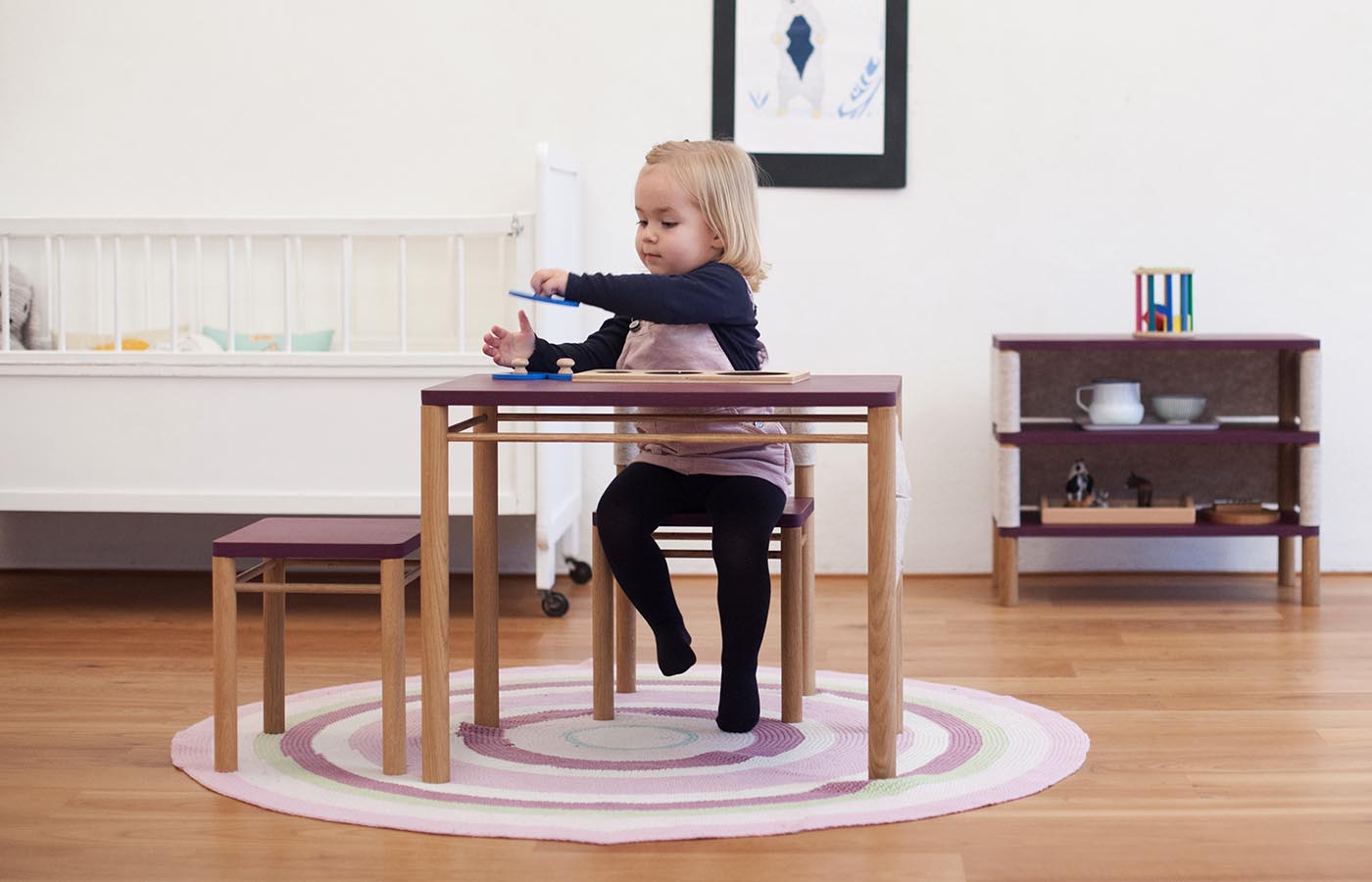
Coclico desk and chair
Camille by Coclico
• suitable for children from ages approx. 1 to 14
• height-adjustable thanks to extensions for the desk, stool and chair legs
• made of FSC-certified solid oak wood and FSC-certified Valchromat (wood fibreboard mass colours with organic dyes)
• manufactured in an owner-managed furniture workshop in Freiburg
• prices: stool: € 219, chair: € 319, desk: € 349
Have a question or prefer to order Camille by Coclico directly? Sandro from Coclico would love to hear from you – just send him an email.
Checklist: what you should bear in mind when buying a children’s desk
1. Find out about the manufacturer: Where is the desk produced? In Germany, Europe or Asia? Short delivery routes often mean better environmental footprints.
2. What material is the children’s desk made of? Wood is considered to be particularly robust, durable and resource friendly.
3. Find out how transparently the material details are available – only with clearly transparent information can you be sure that the desk meets the legal requirements and contains no harmful substances.
4. Height-adjustable function and service life: For what age is the height-adjustable desk designed – and up to what height can it be used?
5. The design: How easily can the desk be incorporated into different rooms? Is the design timeless, durable and preferably suitable to be passed down through generations?
About the authors
Alexandra Brechlin is a cultural journalist with many years of experience – and the mother of a young daughter. Since becoming a mother, she has taken a particular interest in topics related to children: sustainable toys, educational books and everyday family life. For afilii, she writes about everything that affects children in their everyday lives – with a clear focus on quality, sustainability and meaning.

Katja Runge is the founder of afilii. With her many years of experience as a journalist, communications consultant and project manager in the design and creative industries, she brings a keen sense of language and topics to the table. At afilii magazine, she is involved in finding topics, writing articles and editing – working closely with the authors – always on the lookout for relevant, well-written content that offers real added value for our readers.

Translation: Jessica Schewel
This article was updated in April 2026 and first published in August 2021.