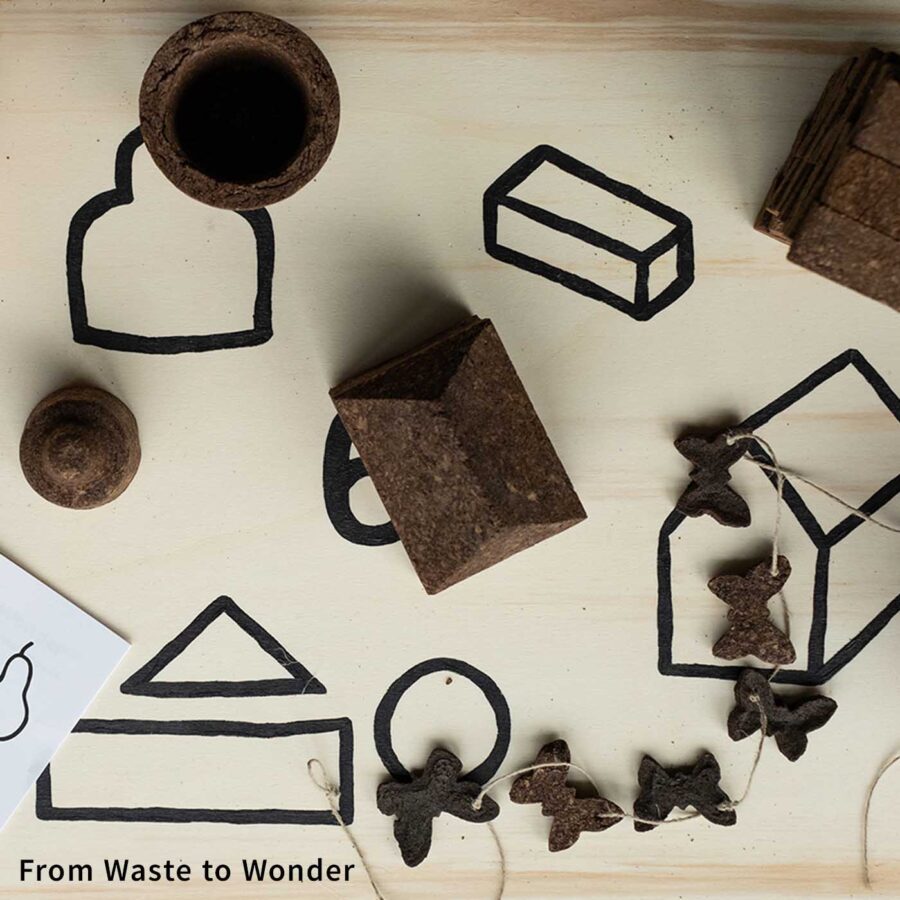
What if waste was not the end of a material, but the beginning of a new idea? With ‘From Waste to Wonder’, social designer Jamie van Duuren invites children and young people to create their own play materials from coffee grounds, potato starch and casein. The hands-on workshop combines material research, circular thinking and playful experimentation – and shows how design can help children see waste itself as a resource for imagination.
Jamie, do you remember when your research into materials first sparked the idea for the ‘From Waste to Wonder’ workshop?
Yes, I definitely remember that journey. It wasn’t one single moment, but rather a growing realization. During my master’s in Social Design, I became fascinated by the possibilities hidden within materials that are usually thrown away. I started experimenting with biowaste like spent coffee grounds, potato starch, and casein, a milk protein, and after many experiments I developed the recipes I still use in my workshops today.
The turning point came when I asked myself, “What are we actually making with these materials?” It wasn’t just about creating sustainable materials – it was about using them to inspire a different way of thinking. Having worked with children as a dance teacher, it suddenly made sense to combine material innovation with play.
That’s how From Waste to Wonder was born. My goal has always been to help children experience sustainability firsthand and show them that waste isn’t just something to throw away – it can be a valuable resource for creativity. I believe that if children encounter this idea from a young age, they’ll be better equipped to think in circular ways.
In ‘From Waste to Wonder’, children and young people create their own play materials from coffee grounds, potato starch and casein. How do they move from raw material to finished object?
The workshop is a hands-on, experimental design process where participants explore how materials are made and where they come from. We start by introducing biowaste-based materials and discussing why they are considered waste or natural by-products.
Participants then mix and create their own bioplastic or clay-like material using simple, low-tech and accessible tools, showing that sustainable materials can be made with simple tools at home. To shape their creations, they use reusable 3D-printed moulds or metal cookie cutters, but they are also free to invent their own forms and ideas.
There is no fixed outcome – children learn by testing, adjusting, and discovering how materials behave and influence design. The process encourages curiosity, creativity, and problem-solving, while gently introducing circular thinking through making and play.
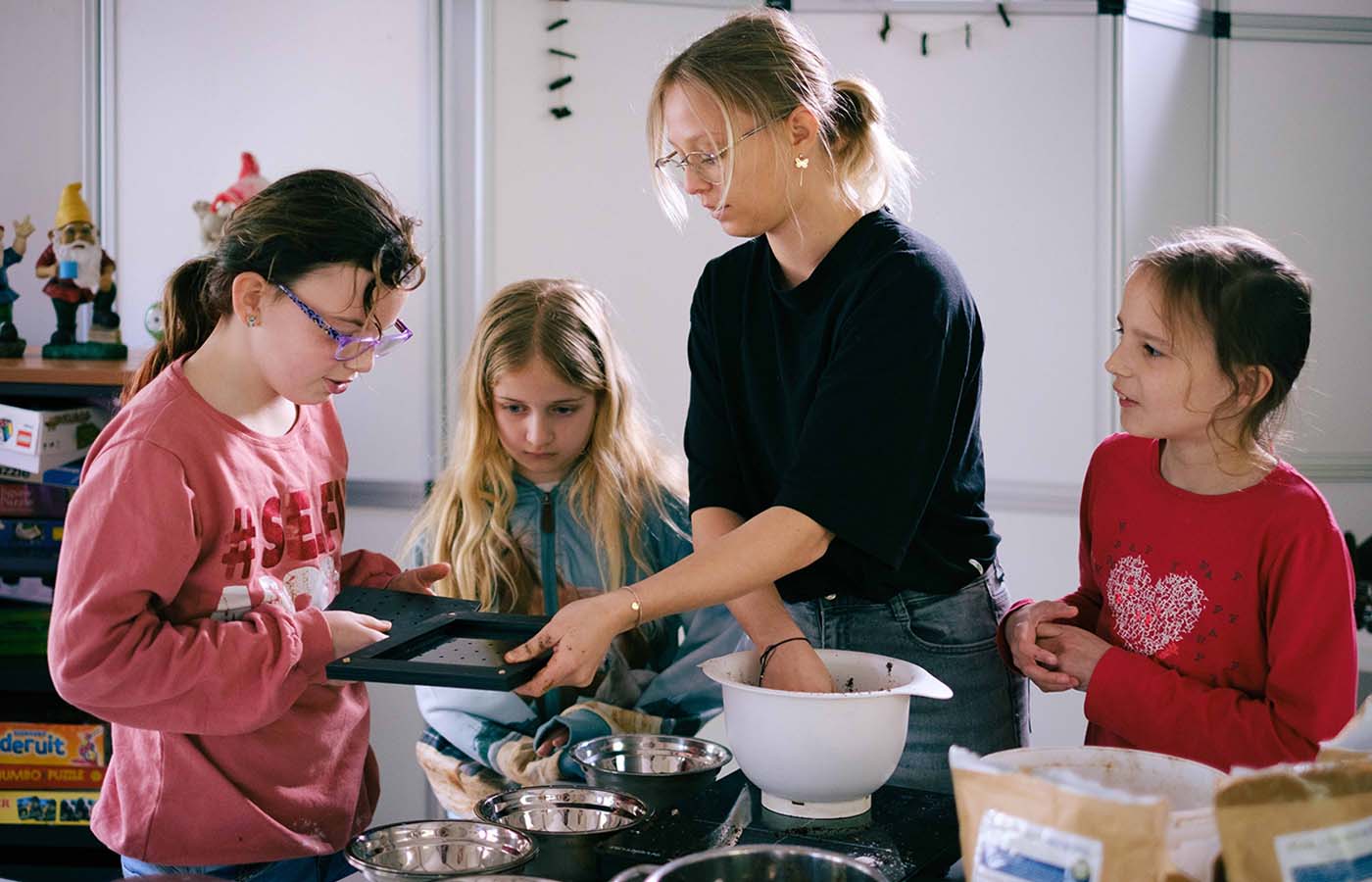
In the From Waste to Wonder workshop, Jamie van Duuren guides children as they turn biowaste into compostable play materials.
You also describe ‘From Waste to Wonder’ as a kids workshop for environmental impact. Why does this phrase matter to you?
I believe children have a key role in shaping a more sustainable future, because the way they learn to think about materials and resources early on can influence their mindset for life.
The workshop is not just about making something fun – it’s about helping them understand where materials come from, what happens after use, and how design can reduce waste instead of creating it.
By offering hands-on, creative experiences rather than only information, children start to see that small actions and choices can have real environmental impact. I believe the biggest shift towards sustainability comes from changing our behavior towards materials, and doing that in a playful and positive way helps it stay meaningful.
Although the workshop is open to everyone and can be enjoyed by all ages, the main focus is on inspiring young changemakers – so that sustainability becomes something natural, creative, and lasting as they grow up.
When children experience that a toy can be compostable and return to the material cycle, how can this change the way they think about consumption, responsibility and design?
Children are often surprised to discover that not everything needs to become permanent waste. Through the workshop, they begin to understand that products can be designed with their full life cycle in mind – not only how they are made, but also what happens after use. This shifts their thinking from “throwing things away” to seeing materials as part of a continuous cycle, sparking curiosity and questions about what things are made of and how they can be transformed.
This mindset shift is supported by a low-impact workshop model that uses upcycled biowaste, requires minimal energy and generates little to no waste. Based on my own estimates, and depending on the materials and setting, the workshops can have a carbon footprint up to 10–20 times smaller than many conventional creative workshops that rely on newly produced materials.
Beyond reducing emissions in the moment, the real impact lies in long-term behavioral change: children carry these ideas into their families and communities, creating a ripple effect that can lead to more conscious consumption and a more sustainable approach to design over time.
Is there an experience or a moment from past ‘From Waste to Wonder’ workshops that has particularly stuck in your memory?
I remember running these workshops for a group of 13- to 14-year-old students in a community school in Amsterdam, about a year ago. After those sessions, I was invited back for their Global Citizenship Day, where students can choose the workshops they want to join.
To my surprise, I had a full group of students who had already done the workshop with me – and they chose it again because they enjoyed it so much. That moment really stayed with me. I adjusted the session slightly and started asking them questions to see what they remembered and how they thought about materials and sustainability afterwards.
They were able to recall the key ideas clearly, especially around rethinking waste and behavior towards materials.
It was the first time I could really see the impact of the workshop in a direct way. It showed me that the idea had stayed with them in a meaningful way – without teachers or parents imposing it. They chose to engage with it themselves, which felt like a powerful sign that they were already starting to think differently about a more conscious relationship with materials.
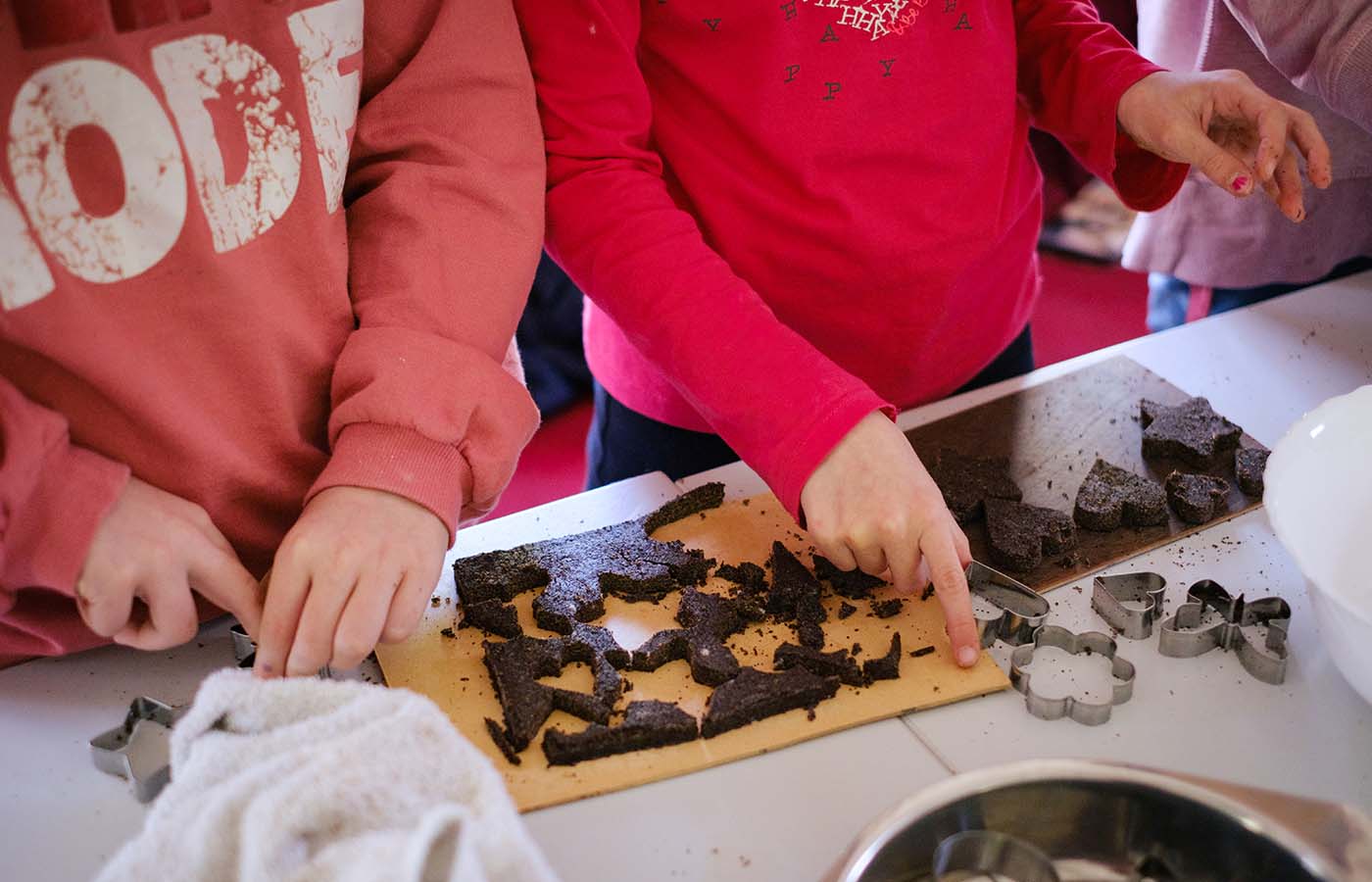
Children explore how coffee grounds can become playful objects.
So far, you’ve been running the ‘From Waste to Wonder’ workshop at design festivals, in museums and social hubs. What are your plans for the future? Where do you want to take this journey?
My goal is to make From Waste to Wonder accessible to as many children and young people as possible, both in the Netherlands and internationally across Europe. I would love to expand the workshops into schools, libraries, museums, science centres, and community spaces, while also collaborating with organisations that want to inspire the next generation around sustainability.
A key part of this vision is to integrate the approach into school curricula, so that “learning by doing” and playful exploration become a more natural part of education. To support this, I also aim to develop workshop kits that teachers can use independently in their own classrooms.
At the same time, I continue to research new sustainable materials and develop new formats that combine creativity, science, and design. Ultimately, I hope From Waste to Wonder grows into a platform that helps children see waste differently, think like designers, and develop a lasting awareness of materials, waste and design.
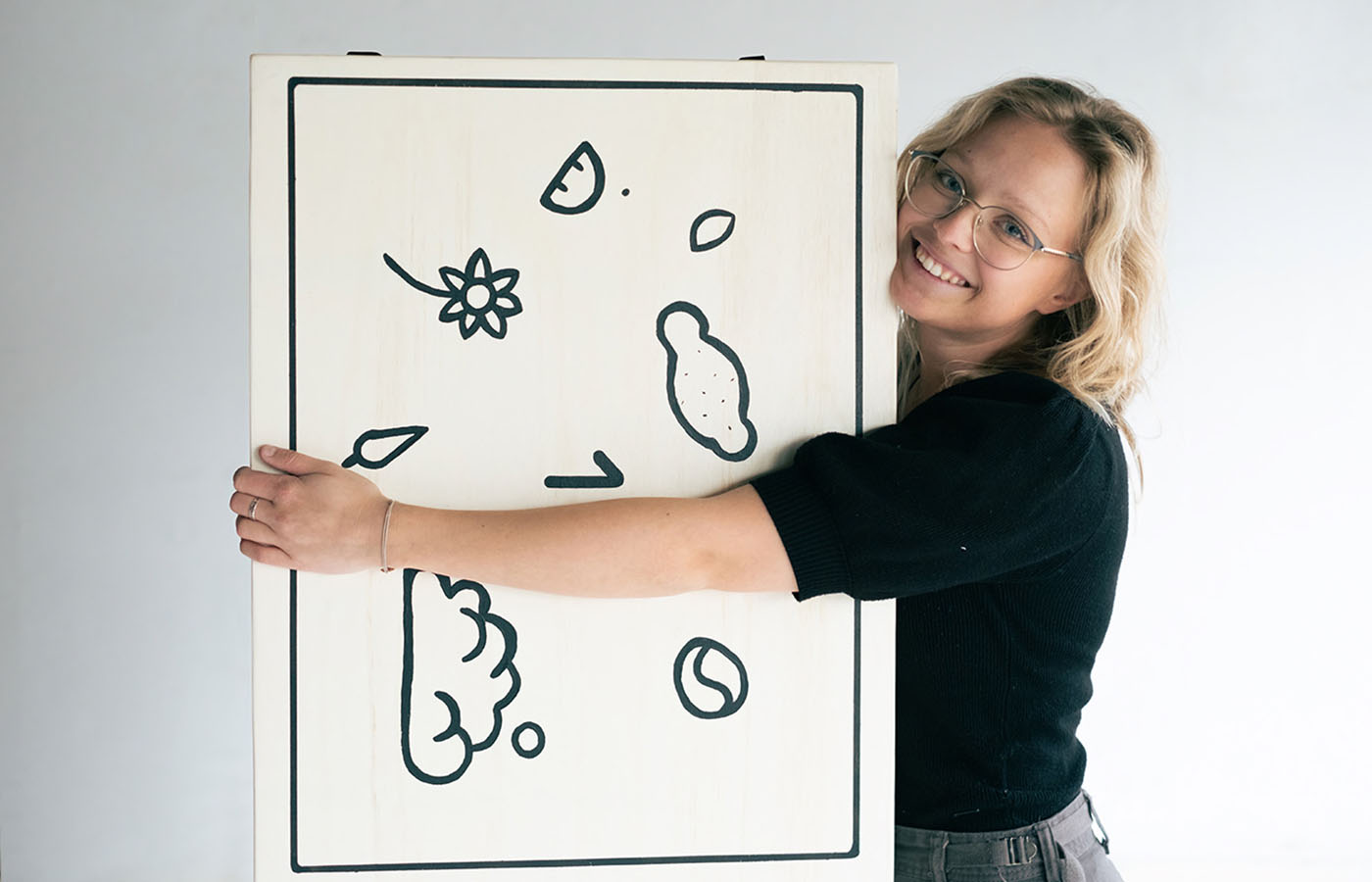
Social designer Jamie van Duuren, founder of From Waste to Wonder
Link:
About the author
Katja Runge studied applied cultural studies, trained as a TV journalist and worked for many years as a communications consultant in the design and creative industries. In 2012, she founded afilii – platform and community for meaningful design for kids. With the Prototypes format, she enables young talents to present their ambitious designs to a wider audience. Katja conducts the interviews herself, edits the answers and puts the finishing touches to the text and images.